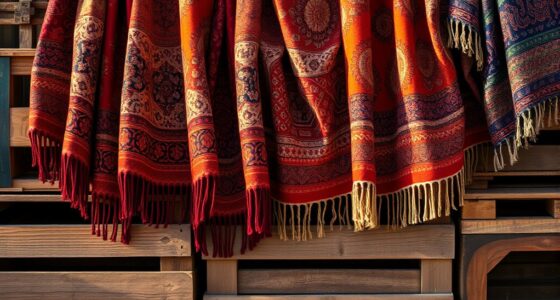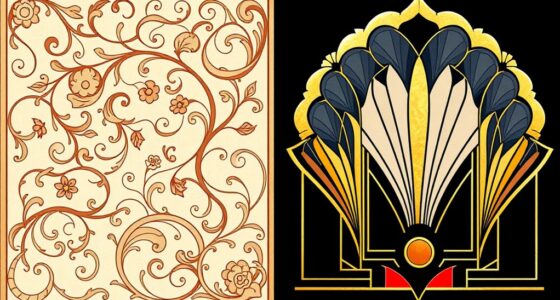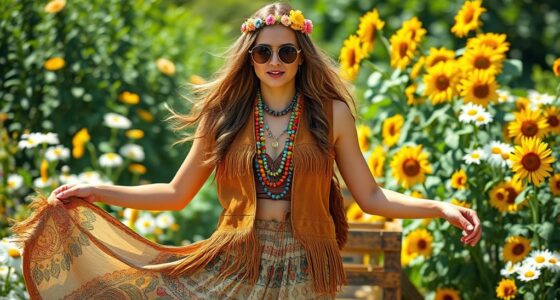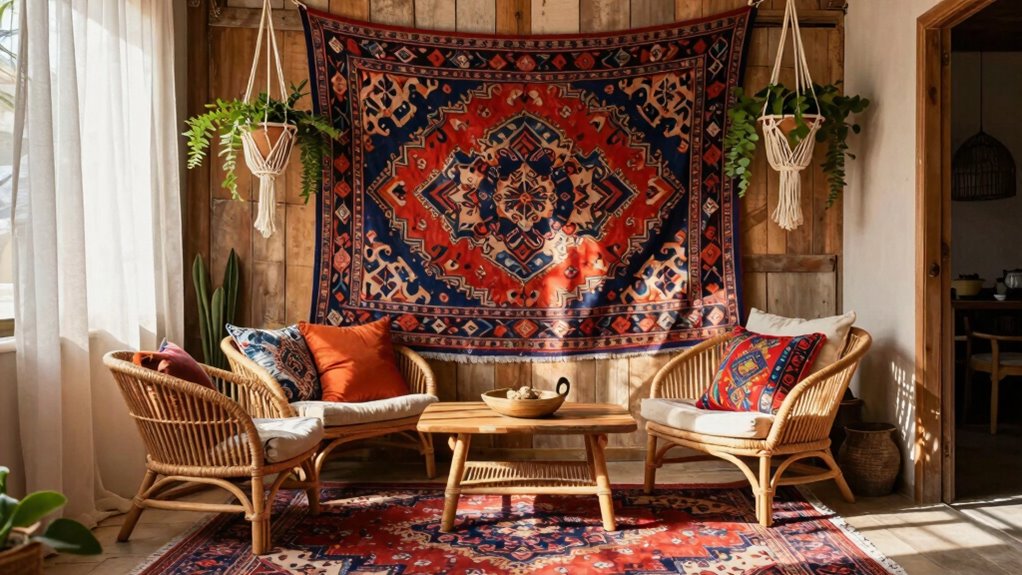
Boho style traces back to 19th-century artists and thinkers rejecting societal norms, influenced by Romani and nomadic cultures that emphasized individuality and free expression. In the 1960s, hippies popularized the relaxed, eclectic look with layered fabrics and earthy tones, blending global patterns from trade routes and cultural exchanges. Over time, boho evolved from a rebellious movement into a mainstream aesthetic. Continuing to explore this history will reveal how its roots can inspire authentic and respectful decor choices.
Key Takeaways
- Boho style originated in the 19th century as a rebellious movement emphasizing individuality, influenced by artists, writers, and Romani culture.
- Roots trace to transient communities and gypsy cultures, featuring layered textiles, vibrant patterns, and handcrafted details.
- The 1960s hippie movement popularized boho’s relaxed, earthy aesthetic as a symbol of freedom and counterculture.
- Traditional boho decor incorporates diverse motifs and materials from ancient trade routes and global cultures.
- Today, boho’s mainstream appeal is shaped by globalization and social media, emphasizing authentic, respectful, and sustainable styling.
boho style throw pillows
As an affiliate, we earn on qualifying purchases.
As an affiliate, we earn on qualifying purchases.
What Are the Origins of the Bohemian Movement?
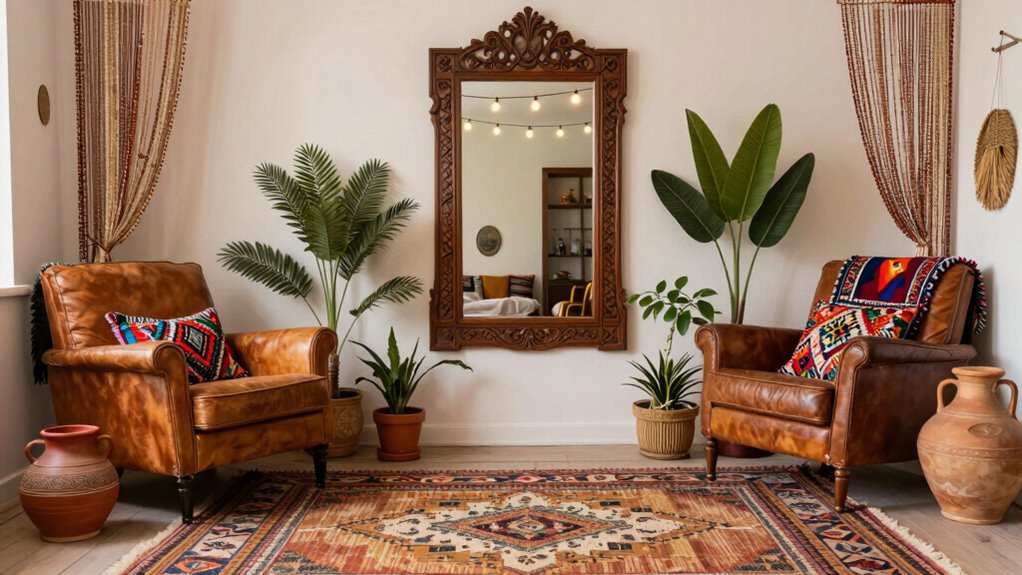
Ever wondered where the bohemian movement started? It emerged in the 19th century, fueled by artists, writers, and thinkers rejecting conventional norms. You’ll notice bohemian fashion reflects this rebellious spirit—mixing eclectic patterns, flowing fabrics, and layered accessories that emphasize artistic expression. The movement’s roots lie in the Romani people and transient communities seeking freedom and alternative lifestyles. As artists and creatives embraced these ideas, they adopted a distinctive style that celebrated individuality and nonconformity. This freedom in fashion allowed for personal storytelling through unique clothing choices, making every outfit a form of artistic expression. The bohemian movement’s origins are all about breaking boundaries, fostering creativity, and living authentically outside mainstream culture. Additionally, the influence of cultural history played a significant role in shaping its diverse aesthetic, highlighting the importance of cultural influences in its development. Recognizing the historical context can deepen understanding of its enduring appeal and evolving style, especially considering how societal shifts impacted its evolution over time.

97 Decor Artsy Eclectic Wall Art – Boho Maximalist, Trendy Gallery Wall Art, Famous Artist Posters, Colorful Japanese Wall Decor Aesthetic Pictures for Home Bedroom (Unframed)
Eclectic Gx8x10: bring a colorful eclectic decor touch to your space with this eclectic art wall decor set,…
As an affiliate, we earn on qualifying purchases.
As an affiliate, we earn on qualifying purchases.
How Did 19th-Century Counterculture Influence Boho Style?
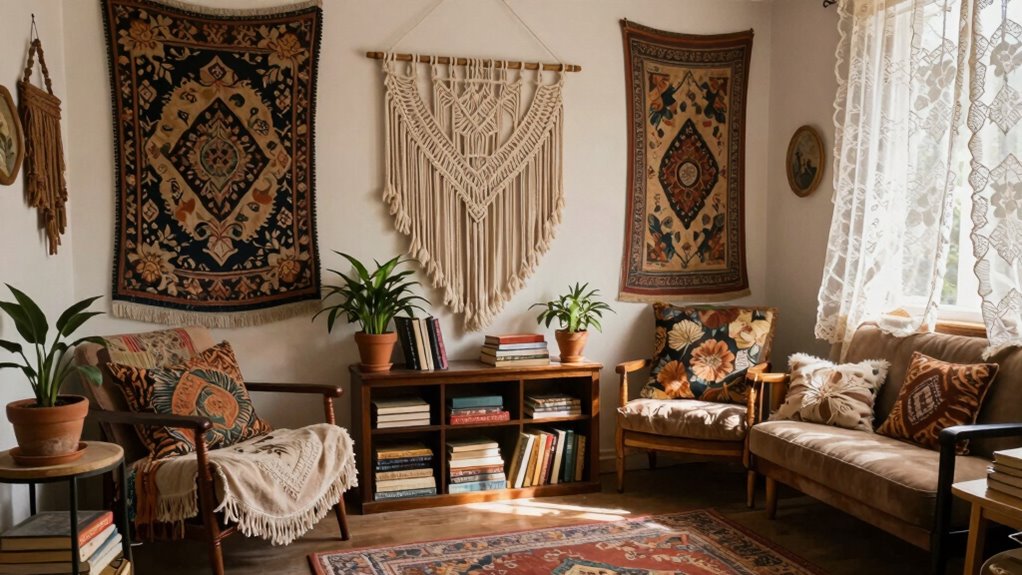
The 19th-century counterculture movements, such as Romanticism, the Beat Generation, and the early bohemians, profoundly shaped the relaxed, expressive style associated with boho fashion. These groups embraced individuality, freedom, and artistic expression, which you can see in boho textiles featuring rich patterns and natural fabrics. They also popularized vintage accessories like jewelry, scarves, and handcrafted items that reflect a carefree spirit. This era’s rejection of mainstream norms encouraged mixing textures, colors, and eras, creating a layered, eclectic look. The influence is clear today, as boho style continues to celebrate creativity and authenticity through its use of vintage accessories and textured textiles. Additionally, the emphasis on natural fabrics and handcrafted items often mirrors the sustainability and artisanal practices valued in modern boho decor. The movement’s emphasis on artisanal craftsmanship highlights the importance of handmade, unique pieces that define the boho aesthetic. This focus on sustainable practices has only deepened over time, reinforcing the movement’s roots in environmental consciousness. Furthermore, the appreciation for reclaimed and vintage materials has become a hallmark of boho decor, emphasizing eco-friendly and unique design choices. Your boho decor and fashion are direct echoes of these rebellious, innovative counterculture roots.
handmade boho textiles
As an affiliate, we earn on qualifying purchases.
As an affiliate, we earn on qualifying purchases.
How Did Gypsy and Nomadic Cultures Inspire Boho Decor?
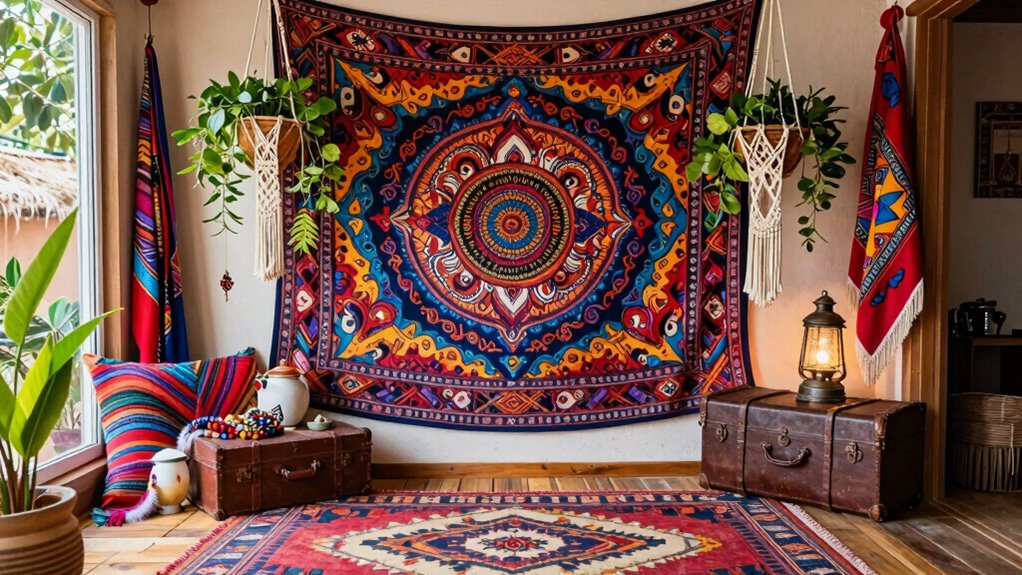
Gypsy and nomadic cultures have profoundly shaped boho decor by emphasizing mobility, individuality, and an eclectic mix of styles. Their influence is evident in the layered textiles, vibrant patterns, and handcrafted details that define boho interiors. You’ll notice how these cultures celebrate unique expression through boho fashion and boho jewelry, blending different influences seamlessly. To visualize this inspiration, consider the following:
| Nomadic Influence | Decor Elements |
|---|---|
| Vibrant textiles | Layered rugs and throws |
| Handcrafted jewelry | Unique, artisanal accessories |
| Eclectic mix | Mix of patterns, colors, and textures |

Freyalife 2pcs Fake Hanging Plants for Room Decor,Artificial Potted Plants Eucalyptus for Aesthetic Vintage Boho Home Office Living Bedroom Wall Patio Bathroom Bookshelf Christmas Indoor Outdoor Decor
【Package Content】: 2 pack artificial hanging plant with black pot,The pot size is 3.5 "x 3.1" (W x…
As an affiliate, we earn on qualifying purchases.
As an affiliate, we earn on qualifying purchases.
How Did the 1960s Hippie Movement Popularize Boho Aesthetics?
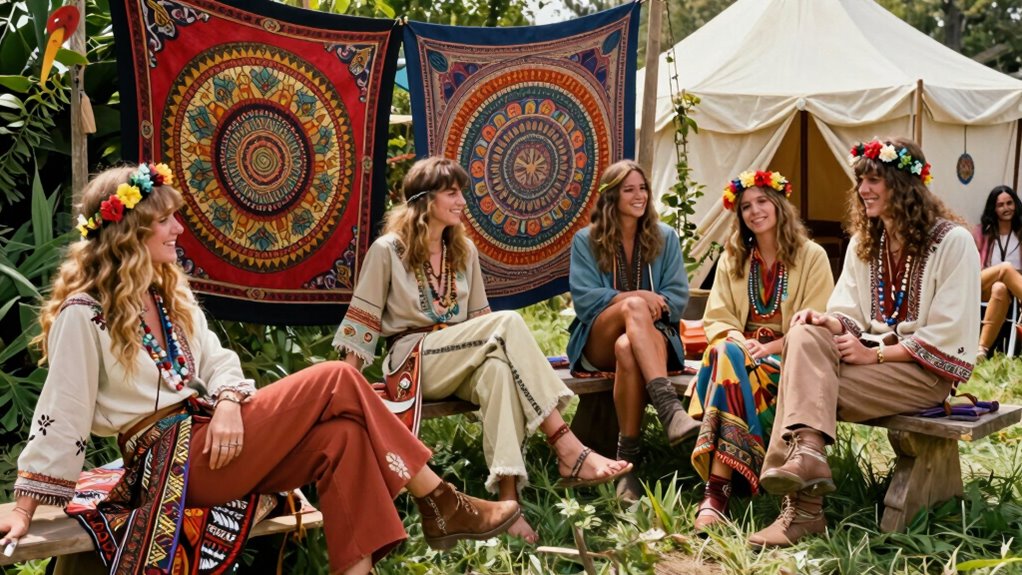
During the 1960s, the hippie movement introduced a relaxed, free-spirited style that caught on quickly. As it spread across communities, this look became a symbol of rebellion and individuality. Now, you can see how this cultural shift made boho aesthetics a lasting part of fashion and decor. The movement’s emphasis on natural materials and Free Floating elements further influenced the eclectic and laid-back nature of boho style.
Hippie Style Emerges
In the 1960s, the hippie movement propelled boho aesthetics into mainstream consciousness by embracing free-spirited fashion and a rejection of conventional styles. You notice how boho fashion became a symbol of individuality, combining flowing fabrics, earthy tones, and layered accessories. Boho jewelry, featuring natural materials like beads, feathers, and stones, complemented this look and showcased a desire for authenticity and connection to nature. As hippies gathered at festivals and in communes, their style spread beyond subcultures, influencing mainstream trends. This movement made boho aesthetics more accessible and appealing, encouraging people to express their personality through relaxed, eclectic clothing and accessories. The hippie style’s emphasis on freedom and self-expression cemented boho’s place as a defining look of the era.
Cultural Influence Spreads
The hippie movement’s vibrant gatherings and communal events served as powerful platforms for spreading boho aesthetics beyond niche circles. These cultural exchanges allowed diverse groups to share styles, ideas, and values, fueling the aesthetic evolution of boho. As people traveled, traded, and connected, they adopted and adapted elements like flowing fabrics, ethnic patterns, and handcrafted accessories. This organic sharing process helped boho become more accessible and mainstream. The movement’s emphasis on freedom, individuality, and natural beauty resonated with a broader audience, transforming boho from counterculture to a popular aesthetic. Additionally, the rise of sustainable fashion practices during this era supported the handmade and eco-friendly roots of boho, further cementing its appeal. The cultural impact of the 1960s was instrumental in shaping contemporary interpretations of boho decor, blending vintage influences with modern sensibilities. Moreover, the emphasis on youth culture and personal expression during this period further propelled boho styles into the mainstream consciousness. The exchange of Indigenous techniques and motifs also played a role in enriching boho’s visual identity, reflecting a broader appreciation for diverse cultural expressions. These exchanges often fostered a sense of cultural appreciation, which continues to influence boho fashion and interior design today. Ultimately, the cultural exchange during the 1960s played a vital role in popularizing boho styles, making them an enduring part of interior decor and fashion today.
How Did Artists and Writers Shape Boho Identity in the 20th Century?
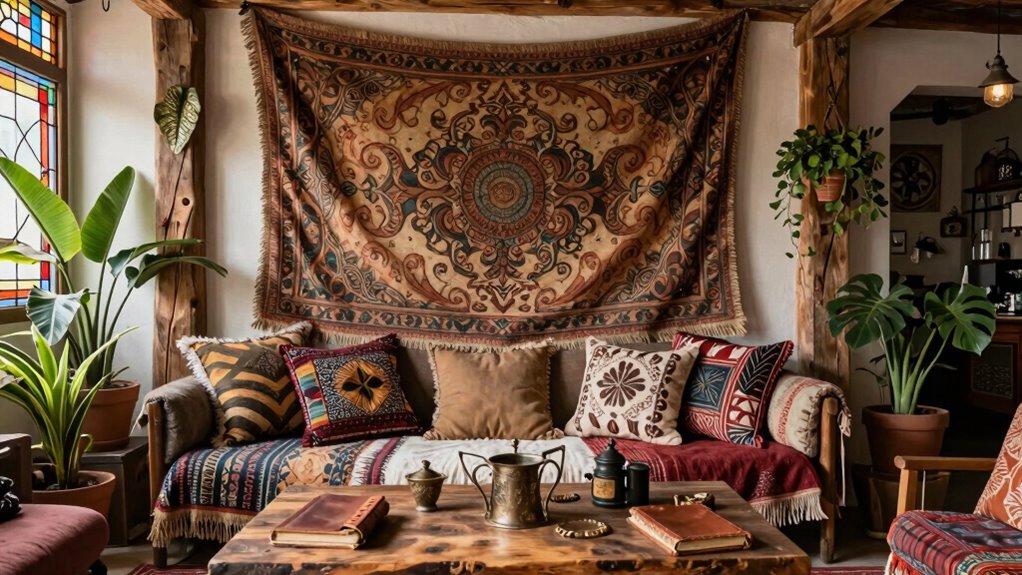
Artists and writers in the 20th century played a key role in shaping Boho identity through innovative artistic movements and cultural perspectives. Their exchanges across different styles and ideas created a vibrant, evolving aesthetic that defined the era. By expressing individualism and embracing diverse influences, they transformed Boho from a trend into a powerful cultural statement.
Artistic Movements Influencing Boho
As the 20th century unfolded, various artistic movements profoundly shaped the boho identity by challenging traditional norms and embracing individual expression. Movements like Surrealism, Dada, and Abstract Expressionism pushed boundaries, inspiring a free-spirited aesthetic. This influence is clear in boho fashion, which combines eclectic patterns, layered textures, and a sense of rebellion against mainstream styles. Boho jewelry often reflects this artistic legacy, featuring handmade, vintage, and globally inspired pieces that celebrate creativity and cultural fusion. Artists and designers drew from these movements to craft a look that emphasizes authenticity, freedom, and personal storytelling. By embracing these influences, boho style became a visual language of artistic independence, encouraging you to mix and match elements that resonate with your unique identity.
Writers’ Cultural Perspectives
Have writers and their cultural perspectives truly shaped the boho identity in the 20th century? Absolutely. Writers like Jack Kerouac and Allen Ginsberg celebrated boho fashion as a symbol of freedom and rebellion, blending diverse cultural influences. Their works emphasized cultural fusion, challenging traditional norms and inspiring a generation to embrace eclectic styles. These writers promoted ideas of spiritual exploration, nonconformity, and artistic authenticity, which directly influenced how boho culture developed beyond fashion into a broader lifestyle. Their writings encouraged a sense of global interconnectedness, inspiring people to mix vintage, ethnic, and handcrafted elements in decor and fashion. This cultural exchange helped solidify boho as a movement rooted in openness, creativity, and a fearless blending of influences. Additionally, the emphasis on cultural fusion in their literature helped define boho’s eclectic aesthetic and inclusive ethos. The influence of support for artistic expression in their work further reinforced boho’s commitment to individual creativity and unconventional styles. Moreover, their advocacy for countercultural values contributed significantly to shaping boho’s identity as a symbol of rebellion against mainstream norms. Recognizing the importance of historical context, these writers helped embed boho within a larger cultural narrative of change and experimentation, highlighting how artistic movements influenced the evolution of boho aesthetics.
20th Century Artistic Exchanges
During the 20th century, the exchange of ideas among artists and writers played an essential role in shaping the boho identity. You notice how textile patterns from different cultures blend seamlessly, reflecting a global appreciation for diverse aesthetics. These patterns, often intricate and vibrant, symbolize freedom and individuality, core boho values. Color symbolism also influences the style, with earthy tones representing connection to nature and bold hues expressing creativity. Artists and writers draw inspiration from traditional textiles and cultural motifs, incorporating them into their work and influencing interior decor. This exchange fosters a sense of eclecticism and authenticity, making boho decor a reflection of artistic openness. It’s this dialogue between creativity and cultural exchange that cements boho’s ever-evolving, worldly appeal. Additionally, the use of cultural motifs in design elements highlights how cross-cultural influences have enriched boho aesthetics over time.
What Are the Key Elements of Traditional Boho Style?
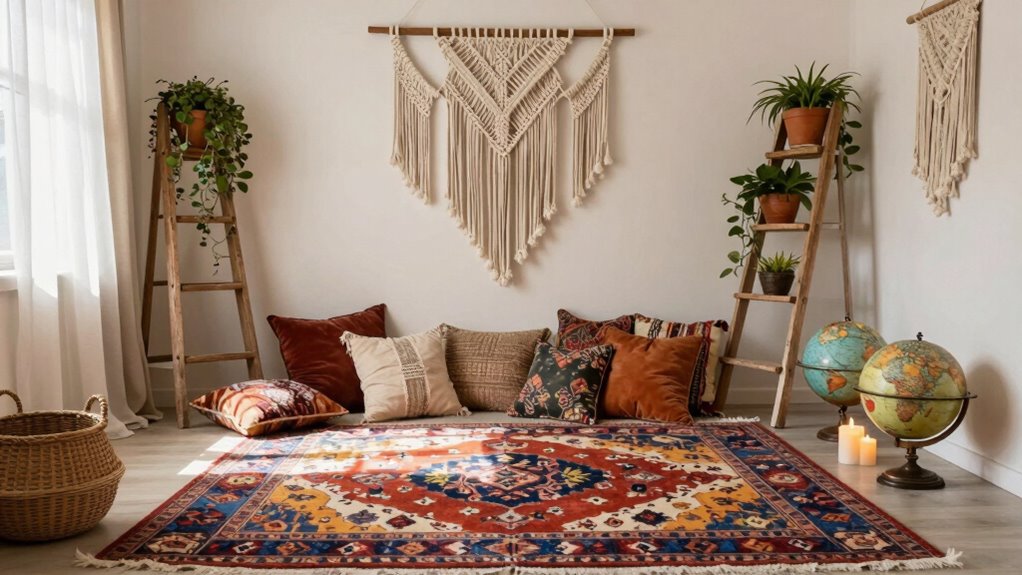
What makes traditional Boho style instantly recognizable? It’s the vibrant textile patterns and eclectic color palettes that define it. You’ll notice a mix of bold, intricate designs—floral, geometric, and tribal motifs—that create visual interest. The color schemes are often warm and inviting, blending earthy tones like terracotta, ochre, and deep greens with pops of bright hues such as turquoise or magenta. These elements come together to evoke a relaxed, artistic vibe rooted in cultural diversity. Texture also plays a key role, with layered fabrics, woven rugs, and tasseled accents adding depth. This combination of lively patterns, rich colors, and tactile richness captures the essence of traditional Boho style, making it instantly recognizable and endlessly inviting.
How Did Global Cultural Exchanges Expand Boho Influences?
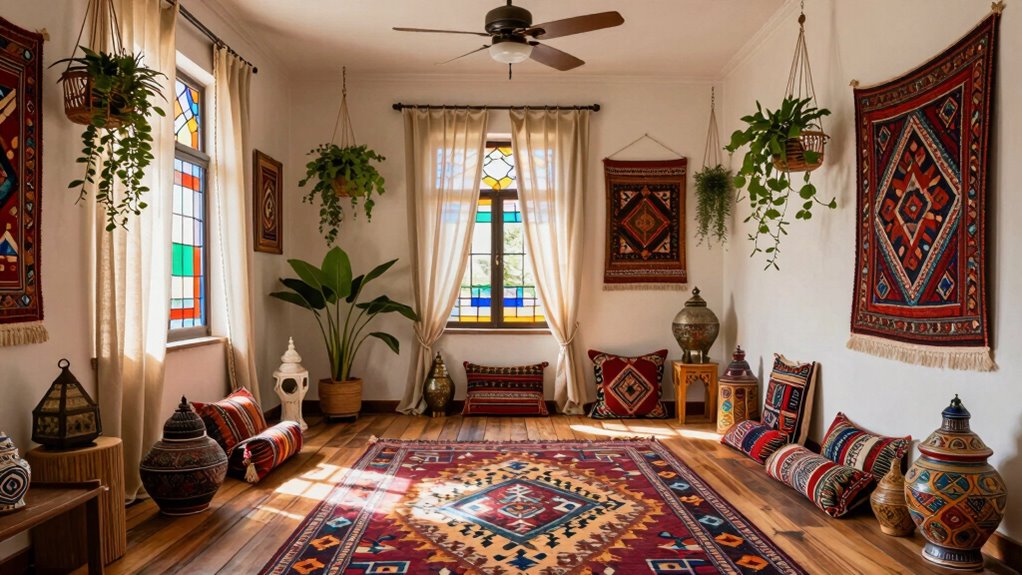
Global cultural exchanges have played a key role in shaping boho style by connecting different traditions through ancient trade routes and colonial artistic interactions. These exchanges introduce diverse patterns, materials, and techniques that enrich boho’s eclectic look. Today, modern globalization continues to expand these influences, blending old and new elements effortlessly. For example, the incorporation of traditional craft techniques from various regions further enhances boho’s layered aesthetic. This ongoing blending of cultures reflects the cross-cultural influences that define boho’s unique appeal. Additionally, the exchange of ideas and styles through historical trade networks has historically facilitated the spread of diverse artistic expressions that remain central to boho’s distinctive character.
Ancient Trade Routes
Have you ever wondered how ancient trade routes facilitated the spread of Boho-inspired styles across continents? These routes, like the Silk Road, connected diverse cultures and introduced new ideas, motifs, and techniques. Medieval craftsmanship traveled along these paths, blending with local traditions to create rich, eclectic designs. Ancient symbolism from regions like Persia and India influenced Boho’s spiritual and mystical elements. This exchange of goods and ideas helped shape the aesthetic’s global appeal. The following table highlights key regions and their contributions:
| Region | Influence |
|---|---|
| Persia | Rich textiles and ancient symbolism |
| India | Vibrant colors, textiles, spiritual motifs |
| Middle East | Intricate metalwork, craftsmanship |
Colonial Artistic Exchanges
During the colonial era, cultural exchanges intensified as European powers explored and traded with distant lands, bringing diverse artistic traditions into contact. You notice how this expanded boho influences through:
- The introduction of intricate textile patterns from Asia and Africa, adding depth and richness to decor.
- The blending of color symbolism, where vibrant hues represented spiritual or cultural meanings, inspiring more expressive palettes.
- The adaptation of handmade crafts, which emphasized authenticity and artisanal techniques in interior design.
- The fusion of styles, as colonial traders combined European aesthetics with foreign motifs, creating eclectic, global-inspired decor.
These exchanges deepened the boho aesthetic, making it a rich tapestry of global artistry, rooted in historical interactions and cultural appreciation.
Modern Global Influences
As international travel and digital connectivity have surged in recent decades, cultural exchanges have become more immediate and widespread, considerably expanding boho influences. You now see those influences in boho fashion, which incorporates diverse patterns, colors, and textiles from around the world. Global textiles, such as Indian block prints, Moroccan rugs, and Southeast Asian batiks, are seamlessly integrated into boho decor, creating a vibrant mix of textures and aesthetics. This global interplay enriches the boho style, making it more eclectic and authentic. You can easily access inspiration from distant cultures online, allowing you to blend traditional elements with modern design. Ultimately, these modern global influences foster a more inclusive, culturally aware approach to boho decor and fashion, reflecting a truly interconnected world.
Why Does Understanding Boho’s Roots Help You Decorate Authentically?
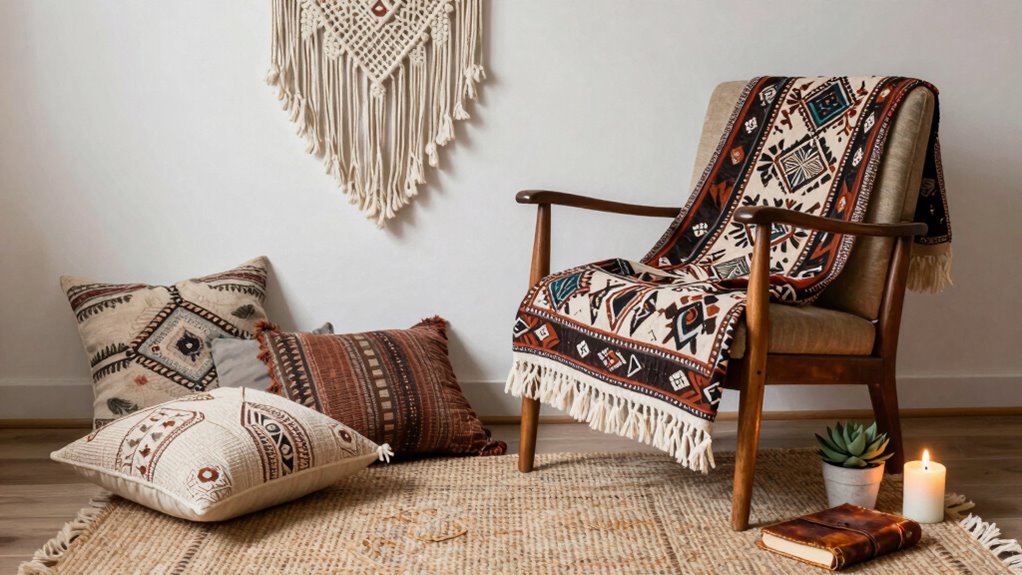
Understanding Boho’s roots is essential because it guarantees your decor remains authentic rather than superficial. When you know its origins, you can create a space that truly reflects boho fashion and boho aesthetics. Here’s why:
- It helps you select meaningful pieces rooted in cultural traditions.
- You avoid cultural appropriation by understanding the history behind the style.
- You can blend authentic elements rather than copying trends superficially.
- Your decor will tell a story, making it more personal and genuine.
How Did Boho Evolve From Rebellion to Mainstream Trend?
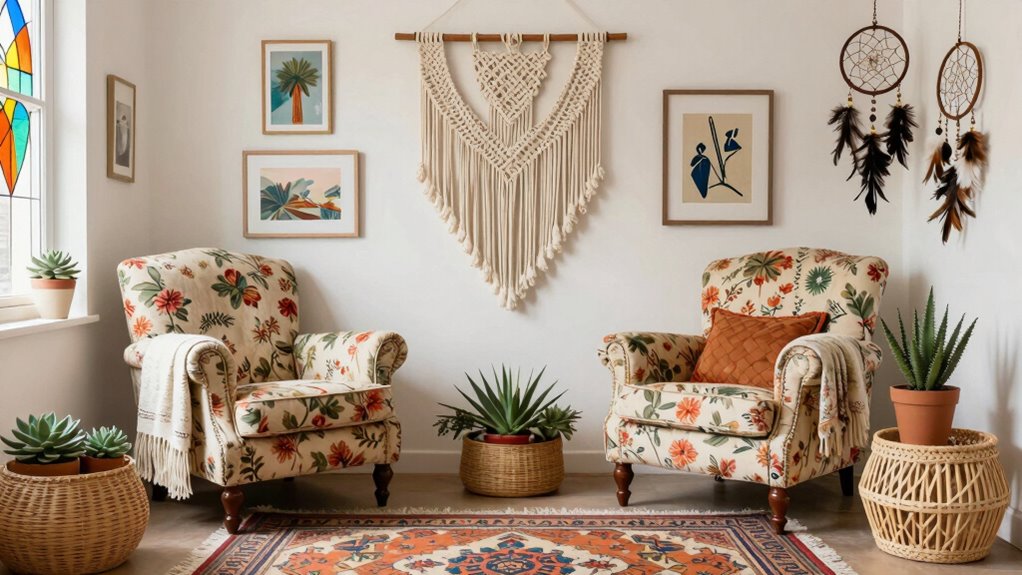
Have you ever wondered how boho went from a symbol of counterculture to a mainstream style? It all started when boho jewelry and boho fashion gained popularity beyond rebellious circles. Influential designers and celebrities embraced the look, blending it with mainstream trends. As boho jewelry became more accessible, it shifted from handcrafted, ethnic-inspired pieces to mass-produced accessories, making the style more approachable. Fashion brands began incorporating flowing fabrics, earthy tones, and eclectic patterns into their collections. Social media helped propel boho into everyday wardrobes, transforming it from an act of rebellion into a versatile, widely accepted aesthetic. Today, boho fashion is a staple in global style, proving how a countercultural movement can evolve into a mainstream trend embraced by all.
How Can You Incorporate Authentic Boho Decor Respectfully?
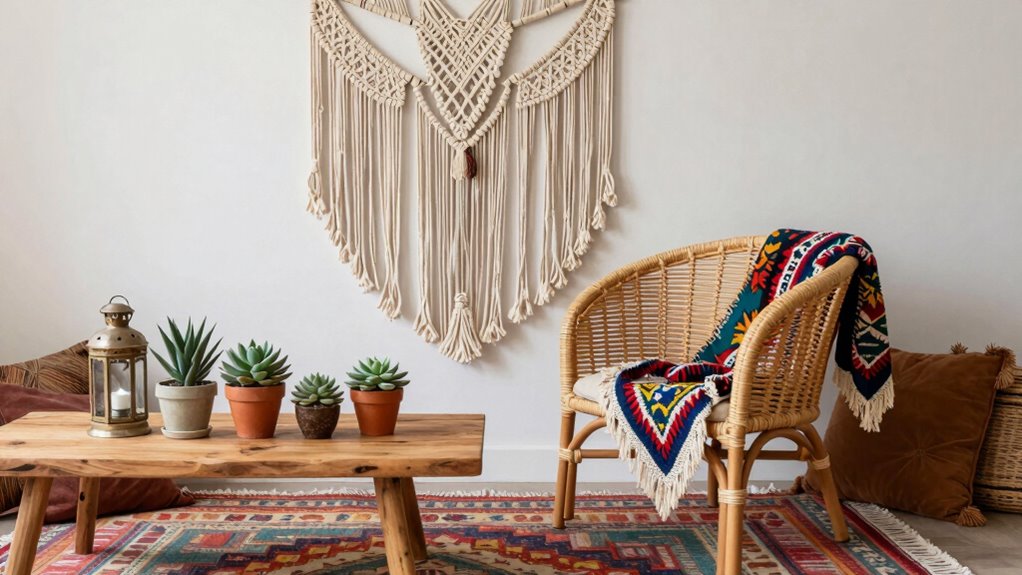
Incorporating authentic boho decor into your space means respecting its roots and avoiding cultural appropriation. To do this, focus on cultural sensitivity and sustainable sourcing. First, research the origins of the pieces you choose, ensuring they support artisans and communities. Second, prioritize items made with eco-friendly materials to promote sustainability. Third, shop from fair-trade sources or directly from artisans to ensure fair compensation. Fourth, embrace diversity by celebrating different cultures rather than appropriating symbols. By following these steps, you honor the true spirit of boho decor, blending beauty with respect for its history and people. This mindful approach helps you create a space that’s authentic, sustainable, and culturally sensitive.
Frequently Asked Questions
How Has Modern Fashion Influenced Contemporary Boho Interior Design?
Modern fashion trends heavily influence contemporary boho interior design by blending eclectic styles and vibrant patterns. You’ll notice cultural influences from global fashion, like ethnic prints and handcrafted details, shaping your space’s aesthetic. As fashion evolves, so does boho decor, encouraging you to mix textures, colors, and accessories inspired by current trends. This dynamic exchange keeps your interior fresh, authentic, and deeply connected to the ever-changing world of fashion.
Are There Specific Regions or Countries Most Associated With Boho Origins?
You’ll find that boho origins are most associated with regions like the Mediterranean and the Middle East, where rich cultural influences shape its style. Mediterranean influence brings in vibrant colors and relaxed textures, while Middle Eastern roots add intricate patterns and layered textiles. These regions’ diverse history and artistry blend seamlessly into boho decor, giving it an eclectic, worldly vibe that’s both inviting and expressive.
What Are Common Misconceptions About Boho Style and History?
You might think boho is just about eclectic decor or free-spirited fashion, but common misconceptions include cultural stereotypes and historical inaccuracies. People often assume boho is tied to specific regions or cultures, which isn’t true—it’s a blend of influences. You should know that boho celebrates diversity and creativity, not stereotypes, and its history is more complex than many realize. Embrace its true spirit by understanding its rich, multicultural roots.
How Can I Incorporate Vintage Boho Pieces Into Modern Decor?
You can effortlessly blend vintage boho pieces into modern decor by starting with vintage accents that add character. Mix and match eclectic layering of textures, patterns, and colors to create a vibrant, personalized space. Don’t be afraid to juxtapose sleek modern furniture with antique finds—this contrast highlights your unique style. Keep the balance playful and intentional, and your space will feel both fresh and full of history.
What Ethical Considerations Are Involved in Sourcing Boho-Inspired Decor?
When sourcing boho-inspired decor, you should prioritize ethical considerations like fair trade and sustainable sourcing. You’re responsible for choosing items that support fair wages and environmentally friendly practices. Look for certifications and transparent brands that prioritize these values. By doing so, you guarantee your decor reflects your commitment to ethical fashion, helping support artisan communities and reduce environmental impact while maintaining your boho aesthetic responsibly.
Conclusion
So, next time you toss in a vintage rug or hang dreamcatchers, remember—they’re more than decor; they’re a rebellion, a history, a story. Ironically, by trying to be authentically boho, you might just be following a trend that’s centuries old. But hey, if it makes your space feel free-spirited and soulful, maybe embracing the roots isn’t such a bad thing—just don’t forget to do it with respect.