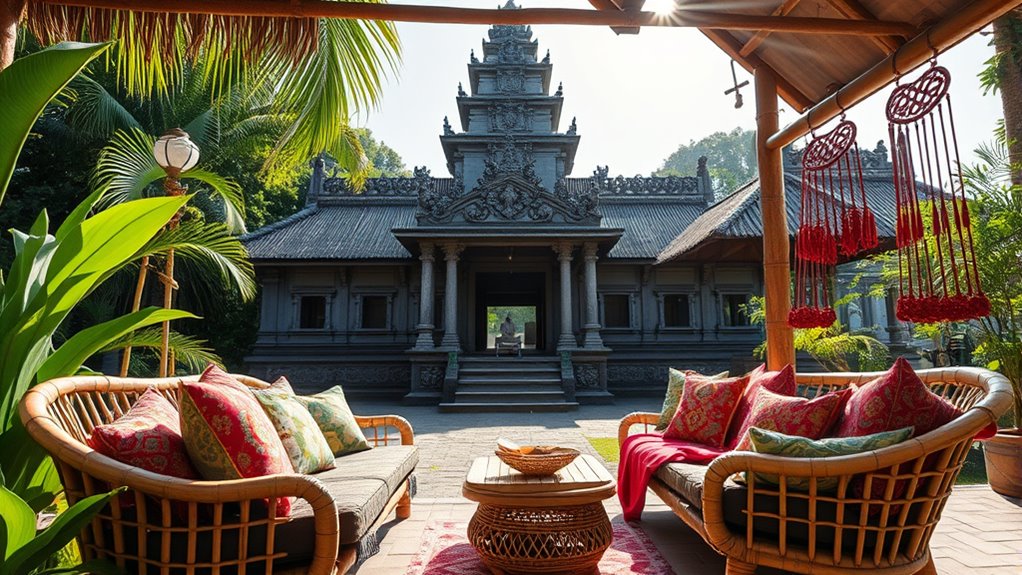

The traditional architecture of Bali combines spiritual symbolism, intricate carvings, and natural materials like bamboo, stone, and thatch, creating harmonious structures rooted in cultural values. Boho style takes inspiration from these elements, blending vibrant textiles, textured decor, and earthy materials to craft a relaxed, eclectic vibe. By incorporating Bali’s craftsmanship and natural textures, you can create a warm, authentic space. Explore further to discover how to beautifully fuse these styles into your own environment.
Key Takeaways
- Balinese architecture emphasizes spiritual symbolism, natural materials, and harmony with nature, reflected in temple gates and layered roofs.
- Traditional Balinese craftsmanship includes intricate carvings of mythological motifs, deities, and natural elements, preserving cultural heritage.
- Boho style blends Balinese influences with eclectic textures, vibrant textiles, and handcrafted decor for a relaxed, worldly aesthetic.
- Both styles prioritize earthy materials like rattan, wood, and textiles, creating warm, authentic, and layered environments.
- Incorporating greenery and soft, ambient lighting enhances the cozy, spiritual, and natural atmosphere common to both Balinese and boho design.
Balinese style bamboo wall art
As an affiliate, we earn on qualifying purchases.
As an affiliate, we earn on qualifying purchases.
The Rich Cultural Heritage of Bali’s Architectural Roots

Bali’s architectural roots are deeply rooted in its rich cultural heritage, which reflects the island’s history, spirituality, and social customs. You’ll notice that Balinese spiritual symbolism plays a crucial role in shaping structures, incorporating sacred motifs and meanings into everyday spaces. Traditional building techniques, passed down through generations, emphasize harmony with nature and spiritual principles. These methods often use natural materials like bamboo, thatch, and carved stone, crafted with skill and reverence. Each element in Balinese architecture embodies cultural values, creating a sense of spiritual connection and community. Additionally, traditional construction methods highlight the importance of craftsmanship and reverence for natural resources, demonstrating how architecture is an integral part of Bali’s cultural identity. By understanding these roots, you’ll appreciate how architecture isn’t just functional; it’s an expression of Bali’s soul, blending tradition, faith, and artistry into every structure.
boho textured throw pillows
As an affiliate, we earn on qualifying purchases.
As an affiliate, we earn on qualifying purchases.
Key Elements of Traditional Balinese Structures
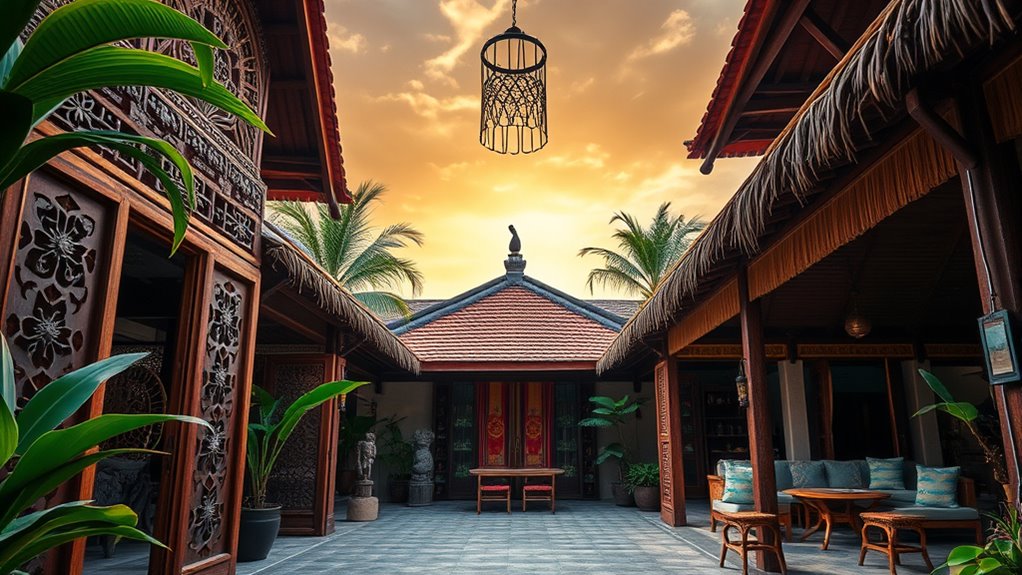
Traditional Balinese structures are characterized by their distinctive architectural elements that reflect spiritual beliefs and cultural values. One key feature is the Balinese temple gates, known as candi bentar, which serve as symbolic thresholds between the spiritual and earthly domains. These gates often feature intricate carvings and are designed to invite positive energy while warding off evil spirits. Another essential element is the traditional alang alang roofing, made from dried grass or palm leaves, which provides natural insulation and blends seamlessly with the environment. These roofs are typically steeply pitched and layered, adding to the aesthetic appeal and functional durability of structures. Together, these elements emphasize harmony with nature and spirituality, forming the core visual identity of Balinese architecture.
handcrafted Balinese wood carvings
As an affiliate, we earn on qualifying purchases.
As an affiliate, we earn on qualifying purchases.
The Craftsmanship Behind Balinese Carvings and Details
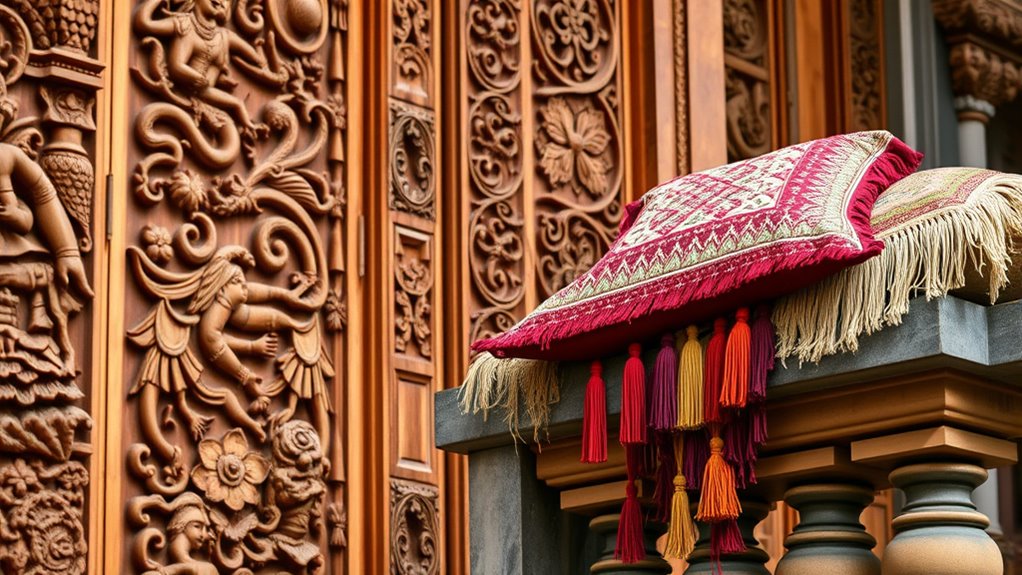
The craftsmanship behind Balinese carvings and details showcases a deep mastery of intricate patterns and symbolic motifs that have been passed down through generations. You can observe this in the delicate work of Balinese wood carvings and intricate stone reliefs that adorn temples and homes. These artisans spend hours perfecting each piece, blending artistry with spiritual symbolism. To paint a picture: 1. Fine, swirling motifs in Balinese wood carvings depict mythological stories and deities. 2. Deeply carved reliefs in stones represent natural elements like waves and mountains, symbolizing harmony. 3. Detailed embellishments in both materials highlight a balance between precision and fluidity. This craftsmanship reflects an understanding of cultural stories, spiritual beliefs, technical skill, and the importance of preserving traditional techniques, creating a timeless connection between art and tradition.
ethnic-inspired ambient lighting
As an affiliate, we earn on qualifying purchases.
As an affiliate, we earn on qualifying purchases.
Characteristics of Boho Style and Its Artistic Influences
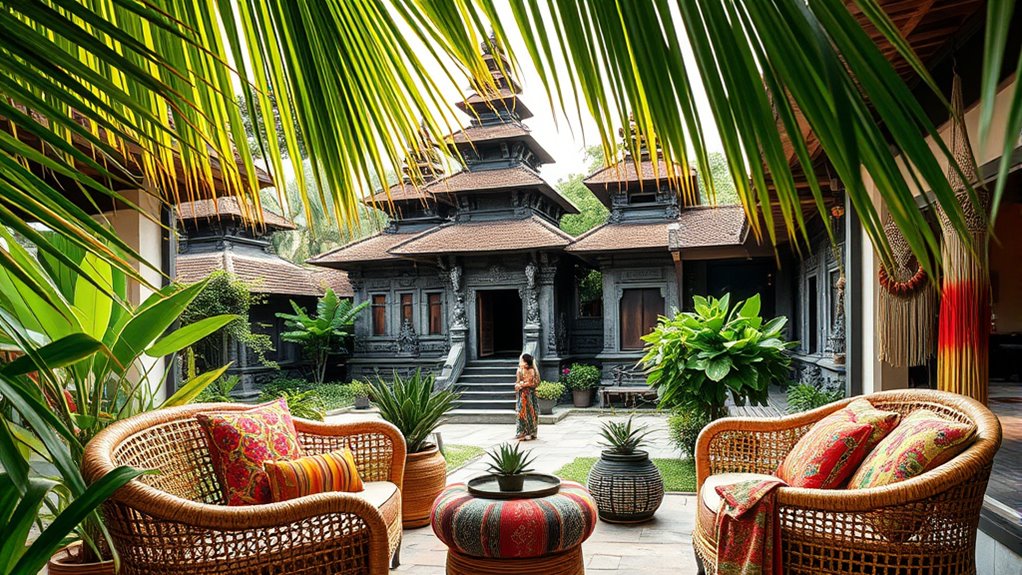
Boho style draws inspiration from the rich craftsmanship and detailed motifs found in Balinese artistry, blending them with a free-spirited, eclectic aesthetic. You’ll notice it often features vibrant textiles, layered patterns, and handcrafted decor that evoke a sense of cultural richness. The style embraces an artistic mix, incorporating elements like florescent lighting to create a lively, energetic atmosphere, while minimalist furniture provides a balanced, uncluttered backdrop. This contrast highlights the carefree, unconventional spirit of boho design, allowing individual expression to shine through. You won’t find rigid symmetry here; instead, the focus is on mixing textures, colors, and influences to craft a uniquely personal space that reflects both tradition and creativity. Additionally, the use of traditional attire and instruments in Native dance performances exemplifies how cultural elements influence artistic expression across different regions.
Organic Materials and Natural Textures in Bohemian Design
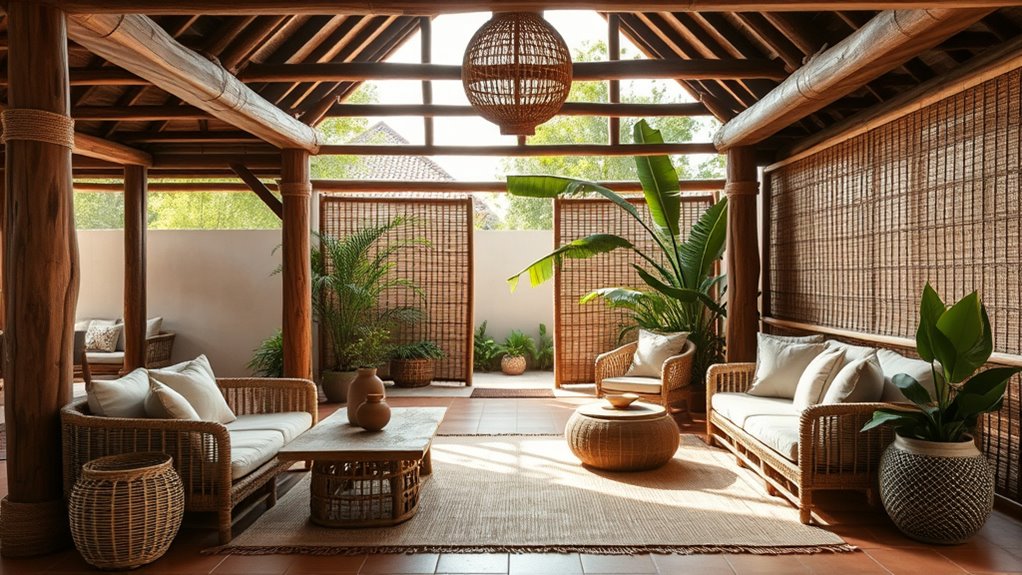
You’ll notice that using earthy materials like jute, rattan, and reclaimed wood brings warmth and authenticity to your space. Layering textured fabrics such as woven throws and embroidered pillows adds depth and coziness. These natural textures and materials create a relaxed, bohemian vibe that connects you to nature. Incorporating natural materials such as these not only enhances aesthetic appeal but also aligns with eco-friendly design principles.
Earthy Material Palette
Organic materials and natural textures form the foundation of an earthy material palette in bohemian design. You’ll notice the use of materials that evoke warmth and authenticity, like reclaimed wood, woven rattan, and untreated stone. These elements highlight indigenous plant motifs, adding a local touch to your space. Handcrafted pottery with organic shapes and earthy glazes enhances the natural vibe. To visualize, consider:
- Rustic wooden beams and furniture showcasing natural grain patterns
- Decor featuring indigenous plant motifs painted or carved into surfaces
- Handcrafted pottery with textured surfaces and muted, earthy colors
Together, these elements create a grounded, organic atmosphere that celebrates the beauty of natural materials, embracing an earthy, boho aesthetic rooted in authenticity.
Textured Fabric Layers
Layering textured fabrics is essential to creating the rich, tactile feel that defines bohemian interiors. You can achieve this by mixing textured fabrics like linen, jute, and cotton, which add depth and warmth to your space. Use layered textiles such as throw blankets, cushions, and wall hangings to enhance the organic vibe. Incorporate natural materials with varied weaves and finishes to evoke a sense of authenticity. These textured fabrics not only provide visual interest but also invite touch, making your environment more inviting. When layering textiles, think about contrasting smooth and rough surfaces to create a dynamic, cozy atmosphere. Embracing organic materials in your textured fabric choices helps you craft a boho style that feels both relaxed and thoughtfully curated. Additionally, understanding textile layering techniques can help you elevate your interior design and achieve a more polished bohemian look.
Harmonizing Bali’s Architectural Features With Boho Decor
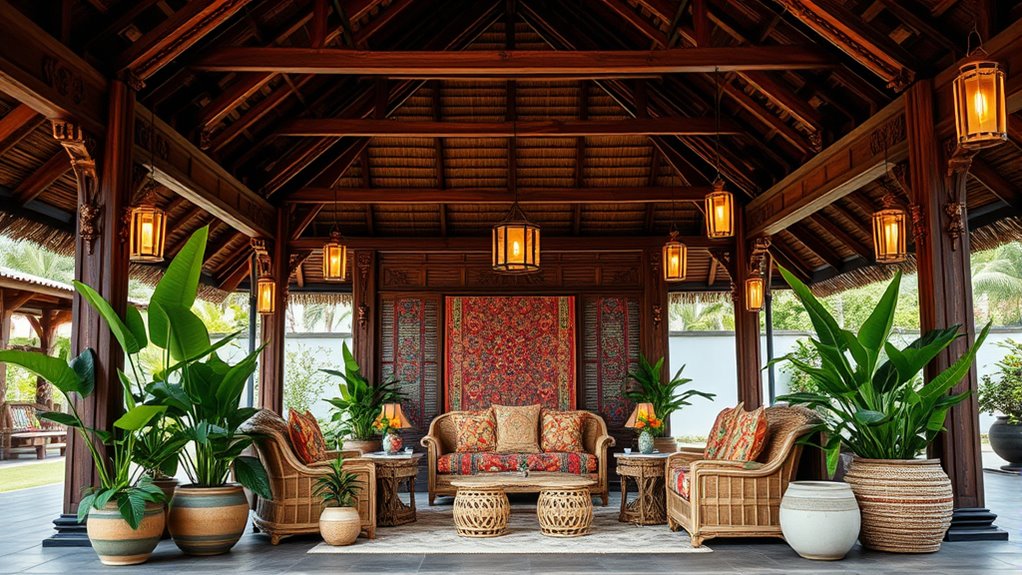
To successfully blend Bali’s traditional architectural features with boho decor, focus on emphasizing natural materials, earthy tones, and handcrafted details. Incorporate elements like carved wood, rattan, and stone to reflect balinese temple symbolism, creating a spiritual and grounded atmosphere. Use a boho color palette with warm terracotta, muted greens, and sandy neutrals to complement the architecture’s natural hues. Additionally, integrating vetted electric bike conversion kits can promote sustainable transportation options that align with Bali’s eco-conscious ethos. This approach creates a harmonious blend that celebrates Bali’s rich tradition while embracing boho’s relaxed vibe.
Tips for Incorporating Traditional and Boho Elements Into Your Space
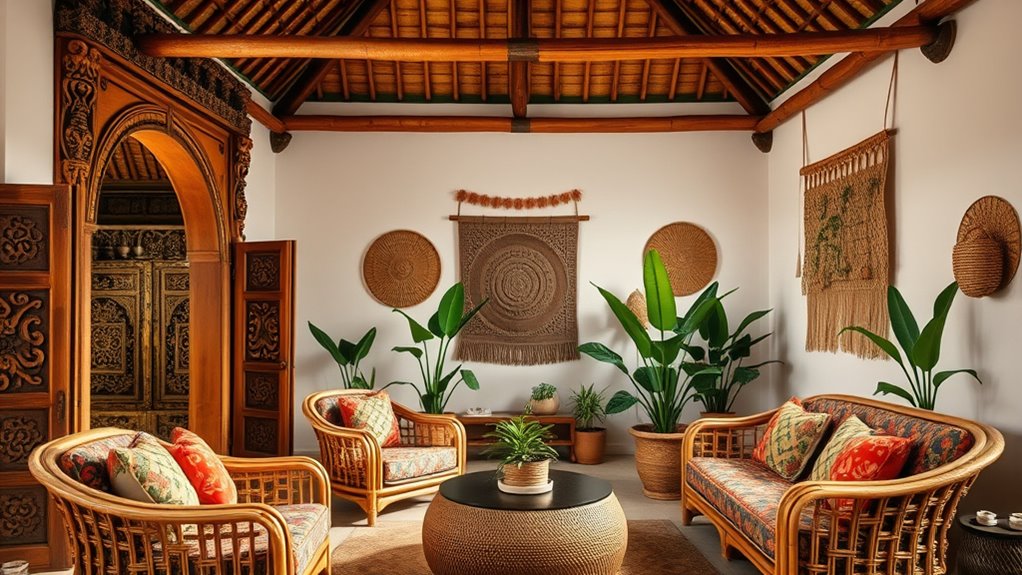
Blending traditional Bali elements with boho style requires intentional choices that highlight the unique qualities of both. Start by selecting warm, earthy color schemes inspired by Bali’s natural surroundings—terracotta, sandy beige, and leafy greens. These hues create a cozy, inviting atmosphere that complements boho’s vibrant, eclectic vibe. For interior lighting, opt for soft, ambient lighting with woven or rattan fixtures to evoke Bali’s traditional lamps while adding boho’s relaxed charm. Incorporate textured textiles, such as woven rugs and embroidered cushions, to enhance the layered look. Mix vintage and handcrafted pieces with modern decor to reflect boho’s carefree spirit while honoring Bali’s cultural roots. Using self watering plant pots can help maintain lush greenery effortlessly, adding to the authentic Bali ambiance. With thoughtful choices in color schemes and lighting, you can create a harmonious space that celebrates both styles seamlessly.
Frequently Asked Questions
How Does Bali’s Climate Influence Its Architectural Design Choices?
You notice that Bali’s hot, humid climate influences its architectural features by promoting climate adaptation. Open-air structures, high ceilings, and shaded verandas help keep homes cool. You’ll see the use of natural ventilation and materials like bamboo and thatch, which prevent heat buildup. These design choices reflect a smart response to the climate, ensuring comfort while blending harmony with the environment.
What Are Common Misconceptions About Boho Style?
You might think boho style is just a messy, eclectic look, but that’s a common misconception. Many believe boho is all about random items thrown together, but it’s actually about intentional layering, textures, and meaningful accessories. Some also assume it’s only for free-spirits or hippies, which is a styling myth. In reality, boho can blend sophistication with laid-back charm, creating a versatile and personalized aesthetic.
Can Traditional Balinese Architecture Be Adapted for Modern Homes?
You can adapt traditional Balinese architecture for modern homes by blending Balinese craftsmanship with contemporary design. As the saying goes, “Old is gold,” and you can incorporate intricate carvings, open-air layouts, and natural materials into your space. Modern integration involves balancing these elements with sleek, minimalist features, creating a harmonious fusion that respects tradition while embracing current trends. This approach results in a unique, culturally rich, and stylish home.
How Do Cultural Beliefs Shape Balinese Building Layouts?
You’ll notice that Balinese building layouts are deeply influenced by cultural beliefs, reflecting spiritual symbolism and ritual significance. You’re encouraged to incorporate specific directions, sacred spaces, and open courtyards aligned with spiritual principles. These elements guarantee harmony, protect against negative energies, and honor ancestors. By understanding and respecting these cultural nuances, your design becomes more meaningful, fostering spiritual connection and cultural authenticity in your space.
What Sustainable Practices Are Used in Creating Boho-Inspired Interiors?
You’re likely to notice that boho-inspired interiors embrace sustainability through recycled materials and local craftsmanship. By repurposing items like vintage textiles and reclaimed wood, you reduce waste and add unique character. Supporting local artisans not only preserves traditional skills but also minimizes environmental impact. This conscious approach creates vibrant, eco-friendly spaces that reflect your love for both style and sustainability, turning your home into a meaningful, eco-conscious haven.
Conclusion
By blending Bali’s rich architectural heritage with boho style, you create a space that’s both timeless and uniquely yours. But the real magic happens when you discover how these elements can transform your environment in ways you never expected. Are you ready to reveal the full potential of this captivating fusion? Immerse yourself, experiment, and let your space tell a story that’s as intriguing as Bali’s ancient temples and boho’s free spirit—waiting just beneath the surface.