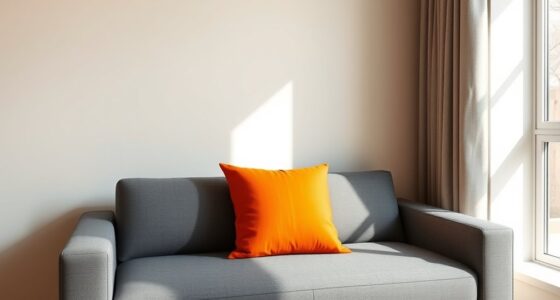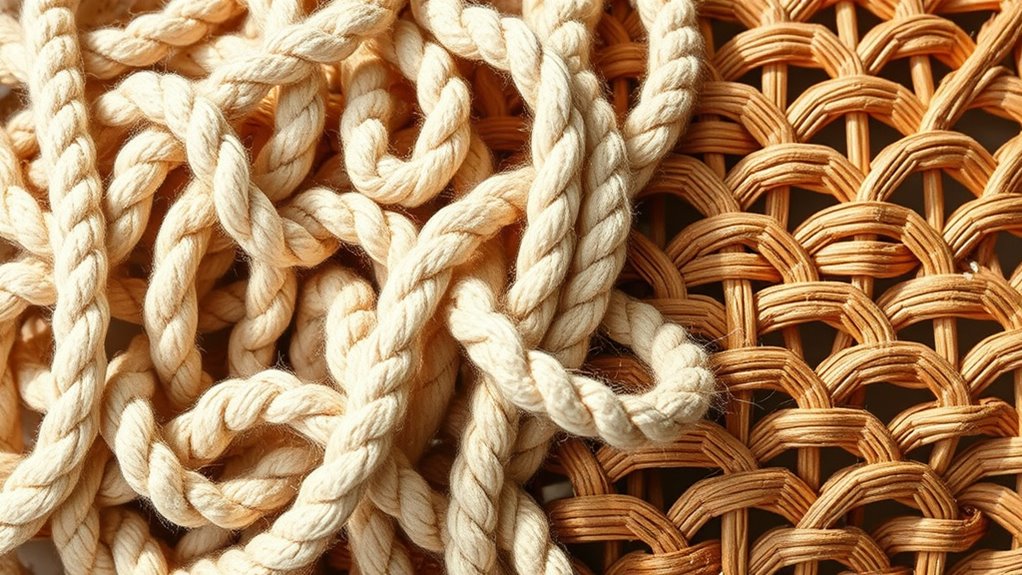
Texture trends, from bouclé to rattan, are transforming how you experience spaces and fashion through tactile contrast and material mixing. You can create visual and sensory depth by pairing soft fabrics with hard surfaces or combining chunky knits with sleek leather. These deliberate material combinations invite touch and discovery, making designs more engaging and personalized. If you want to explore how these textures elevate your style and surroundings, stay tuned for more inspiring ideas.
Key Takeaways
- Texture trends now emphasize mixing tactile elements like bouclé, rattan, velvet, and leather for visual and sensory richness.
- Bouclé fabrics are popular for their soft, textured appearance, adding cozy sophistication to interiors and fashion.
- Rattan’s natural, woven texture is trending in furniture and accessories, creating organic, tactile appeal.
- Combining plush textures with rougher materials like linen or marble enhances tactile contrast and visual interest.
- Future trends focus on thoughtful material pairings to create immersive, expressive spaces and stylish garments.
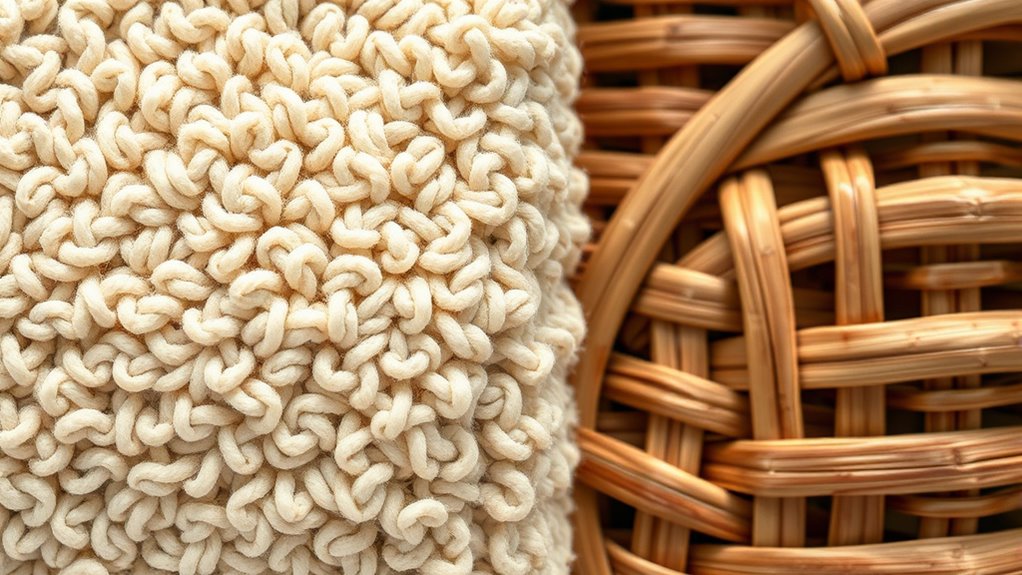
Texture trends are transforming the way we experience design, adding depth and tactile interest to both interiors and fashion. When you explore current trends, you notice how material combinations and tactile contrasts play a crucial role in creating dynamic, inviting spaces and styles. These elements aren’t just about look—they’re about feeling, engaging your senses to forge a richer connection with your environment. By mixing different textures, designers and fashionistas craft visually compelling and tactilely diverse experiences that immediately draw you in.
Texture trends blend visual appeal with tactile richness, transforming spaces and styles through engaging material contrasts.
In interior design, expect to see a bold interplay of materials that emphasize tactile contrasts. Think of pairing soft, plush fabrics with sleek, hard surfaces—velvet with metal, linen with glass. These combinations heighten the sensory appeal of a room, making it feel layered and multidimensional. For example, a cozy bouclé armchair next to a smooth marble countertop creates a visual juxtaposition that’s both striking and inviting. It’s not just about aesthetics; it’s about creating spaces that invite touch and discovery. When you walk into a room with well-balanced material combinations, you’ll find your gaze drawn to different textures, each telling its own story and adding to the overall ambiance. Incorporating material combinations is essential for achieving this tactile richness.
Fashion, too, is embracing this tactile diversity. Designers now mix fabrics like leather, knits, and woven rattan to generate tactile contrasts that make garments more interesting and expressive. Imagine a chunky knit sweater paired with a sleek leather skirt or a rattan handbag accented with soft, textured fabrics. These combinations give your look depth and personality, making your outfit more engaging to the touch and eye. Texture trends encourage you to experiment with layering different tactile elements, transforming simple pieces into statement styles. You’ll notice how these contrasting textures can elevate everyday outfits, adding a sense of craftsmanship and intentionality.
In both spaces, the key is the deliberate use of material combinations to enhance tactile contrasts. This approach invites you to not only see but feel the textures around you, creating a more immersive experience. As trends evolve, expect to see an increasing emphasis on mixing textures thoughtfully—whether through plush upholstery paired with rougher elements or sleek surfaces contrasted by soft textiles. This focus on tactile contrast enriches your environment, making it more engaging and expressive. Embracing these material combinations lets you craft spaces and looks that are as compelling to touch as they are to see, elevating your overall aesthetic experience.

UNUQLIVCO 360° Swivel Accent Armchair, 39.3" Oversized, Sherpa Boucle Fabric Sofa Chair with Removable Back & Arm Pillows, Swivel Chair with Cozy Soft Padded (1, Cream White)
30.7” Spacious Seat & 4.33” Ergonomic Armrest Design—Enjoy unparalleled comfort with a 30.7" extra-wide seat (20% wider than…
As an affiliate, we earn on qualifying purchases.
As an affiliate, we earn on qualifying purchases.
Frequently Asked Questions
How Do I Incorporate Bold Textured Pieces Into a Minimalist Decor?
You can incorporate bold textured pieces into your minimalist decor by choosing one statement item, like a rattan chair or bouclé throw, to serve as a focal point. Keep surrounding elements simple and neutral to maintain minimalist balance. Use bold accents sparingly—perhaps in cushions or artwork—to add visual interest without overwhelming the space. This approach highlights textures while preserving clean, uncluttered aesthetics.
Which Textures Are Best for Allergy-Sensitive Environments?
For allergy-sensitive environments, choose hypoallergenic fabrics like tightly woven cotton or microfiber, which resist dust mites and allergens. Natural fiber options like linen or silk also work well, as they’re less likely to trap allergens. Avoid heavy, plush textures like shag or deep pile carpets, which can harbor dust. Opt for smooth, easy-to-clean surfaces that promote better air quality and reduce allergy triggers in your space.
How Can I Maintain and Clean Textured Materials Effectively?
You can maintain and clean textured surfaces effectively by regularly vacuuming with a soft brush attachment to remove dust and debris. For fabric maintenance, spot clean with a mild detergent and a damp cloth, avoiding harsh chemicals. Gently brush or use a lint roller on textured materials like bouclé or rattan to lift dirt. Consistent cleaning prevents buildup, keeps surfaces looking fresh, and preserves the integrity of your textured furniture.
Are There Eco-Friendly Options for Textured Furniture and Decor?
Yes, you can choose eco-friendly textured furniture and decor made from sustainable materials like bamboo, reclaimed wood, or organic cotton. Look for products with eco-friendly finishes, such as natural oils or water-based sealants, which reduce chemical use. These options help you create stylish, textured spaces while minimizing environmental impact. Always check for certifications like FSC or Greenguard to guarantee your decor aligns with sustainable and eco-friendly principles.
How Do Textures Influence the Acoustics of a Room?
Textures considerably influence your room’s acoustics by enhancing sound absorption and reducing echoes. Soft, plush materials like bouclé or rattan help dampen sound waves, creating acoustic enhancement for a more comfortable space. When you incorporate textured furniture and decor, you improve sound quality naturally, making conversations clearer and the environment more inviting. Choosing the right textures not only adds visual interest but also optimizes your room’s acoustic performance effectively.

Best Choice Products 12x12in Hyacinth Baskets, Rustic Set Of 5 Multipurpose Collapsible Storage Organizer, Handwoven Laundry Totes for Bedroom, Living Room, Shelves w/Inserts – Natural
COMPACT DESIGN: A lightweight design with cut out handles makes these baskets easy to carry from room to…
As an affiliate, we earn on qualifying purchases.
As an affiliate, we earn on qualifying purchases.
Conclusion
As you explore these texture trends, remember that they’re more than just surfaces—they’re stories waiting to be told. From bouclé’s cozy embrace to rattan’s natural charm, each adds depth and personality to your space. Embrace the tactile dance, the contrast, the rhythm of textures blending seamlessly. Let your surroundings whisper your style, turning every touch into a statement—because in the world of textures, it’s the feeling that truly speaks louder than words.

MIULEE Pack of 2 Brown Decorative Velvet Throw Pillow Cover Soft Pillowcase Solid Square Cushion Case for Sofa Bedroom Car 20×20 Inch 50×50 Cm
Quality Material: Made of velvet, ultra soft. Zipper is hidden and works smoothly. The fabric will exhibit different…
As an affiliate, we earn on qualifying purchases.
As an affiliate, we earn on qualifying purchases.

Coffee Table, Modern Faux Marble Living Room Table in Grey, Apartment
Coffee Table Living Room Table: Grey and wood MDF coffee table, a blend of elegance and natural fashion,…
As an affiliate, we earn on qualifying purchases.
As an affiliate, we earn on qualifying purchases.