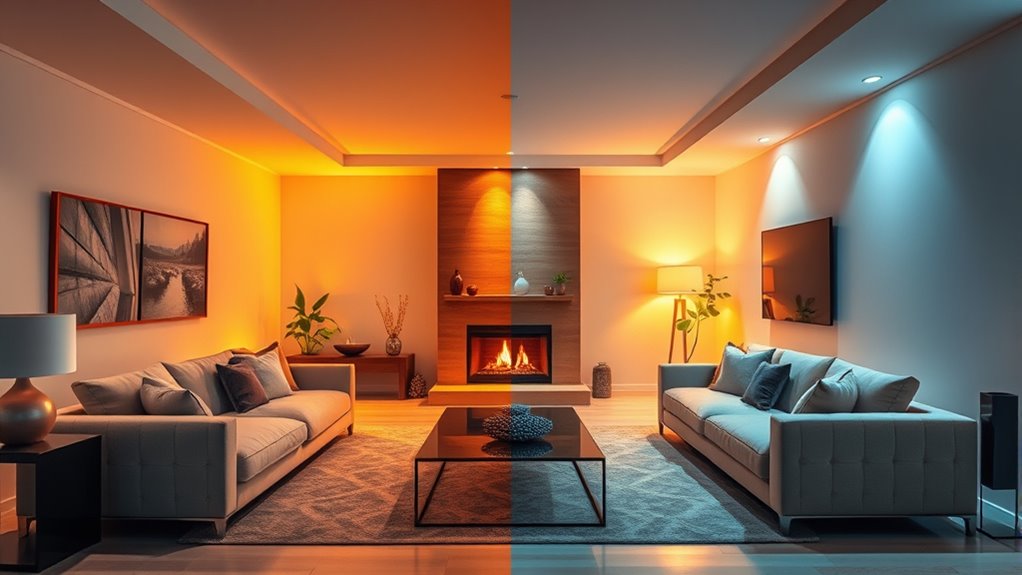

Warm lighting, with its amber tones, creates cozy, inviting atmospheres that feel relaxing and welcoming, perfect for unwinding or social spaces. Cool lighting, featuring blue and white hues, boosts alertness, enhances clarity, and fosters a modern, clean environment, ideal for focus or productivity. Choosing between them depends on the mood you want to set and the room’s purpose. If you want to learn how to balance these effects for the best ambiance, keep exploring.
Key Takeaways
- Warm lighting creates cozy, inviting atmospheres ideal for relaxation and social spaces, while cool lighting promotes alertness and modernity.
- Warm tones evoke feelings of comfort and intimacy, whereas cool tones foster clarity, focus, and a clean, contemporary vibe.
- Warm lighting enhances textures and colors, making environments feel more welcoming; cool lighting improves visual clarity and task performance.
- The choice of warm or cool light affects mood: warmth relaxes and soothes, coolness energizes and sharpens focus.
- Combining both lighting types strategically can balance ambiance, highlighting key areas and creating a versatile, inviting room.
warm white LED light bulbs
As an affiliate, we earn on qualifying purchases.
As an affiliate, we earn on qualifying purchases.
Understanding Color Temperature in Lighting
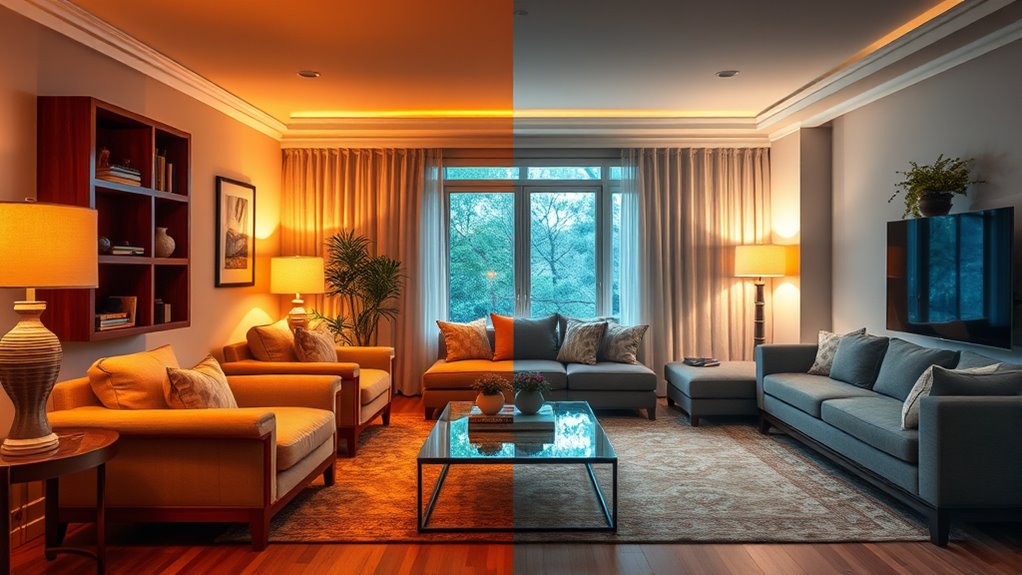
Understanding color temperature in lighting is essential because it determines how a space feels and how colors appear. In lighting design, selecting the right color temperature influences the mood and atmosphere you create. Cool lighting, with higher Kelvin values, tends to feel modern, energetic, and crisp, enhancing clarity and focus. Warm lighting, with lower Kelvin values, offers a cozy, inviting vibe that encourages relaxation. Your choice impacts color psychology, affecting how people perceive and respond to a room. For example, cooler tones can boost alertness, while warmer tones foster comfort. By understanding these principles, you can craft environments that support specific activities and emotional reactions, ensuring your lighting aligns perfectly with your intended ambiance and functional needs. Additionally, considering light quality can further optimize the overall effect of your lighting design.
cool daylight LED bulbs
As an affiliate, we earn on qualifying purchases.
As an affiliate, we earn on qualifying purchases.
The Psychological Impact of Warm Lighting
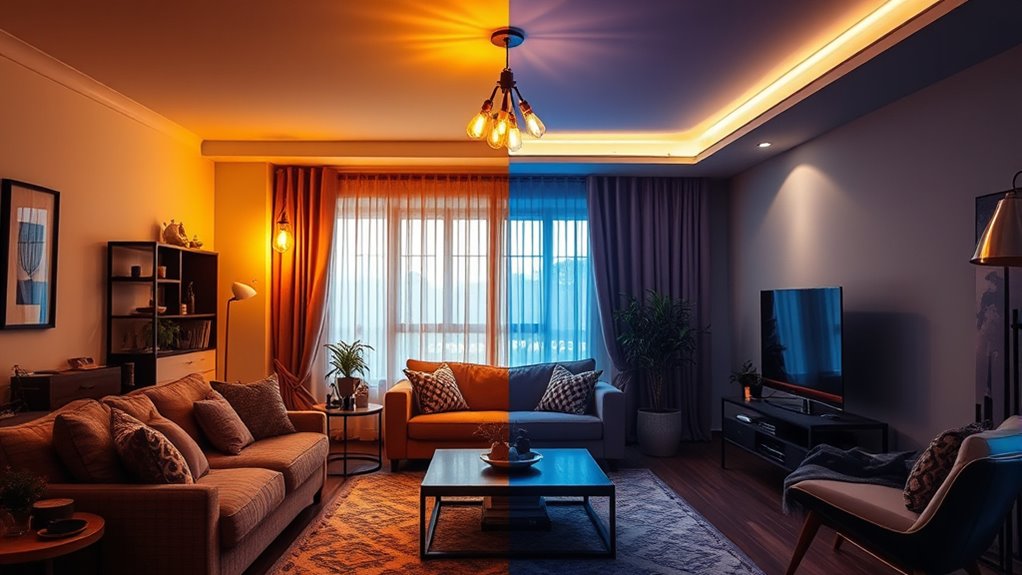
Warm lighting has a powerful psychological effect that can markedly influence how you feel in a space. According to color psychology, warm tones like amber and soft yellow evoke feelings of comfort, relaxation, and coziness. When you’re surrounded by warm light, your emotional response tends to shift toward calmness and contentment, making it ideal for creating inviting environments. This type of lighting can reduce stress and promote intimacy, which is why it’s often used in living rooms and bedrooms. By stimulating a sense of security and familiarity, warm lighting helps you unwind and feel more at ease. Additionally, electric bikes with powerful motors can enhance your outdoor experience, making leisure activities more enjoyable. Understanding this emotional impact allows you to intentionally select lighting that enhances the mood and atmosphere you desire in any room.
adjustable color temperature smart lighting
As an affiliate, we earn on qualifying purchases.
As an affiliate, we earn on qualifying purchases.
How Cool Lighting Influences Mood and Productivity
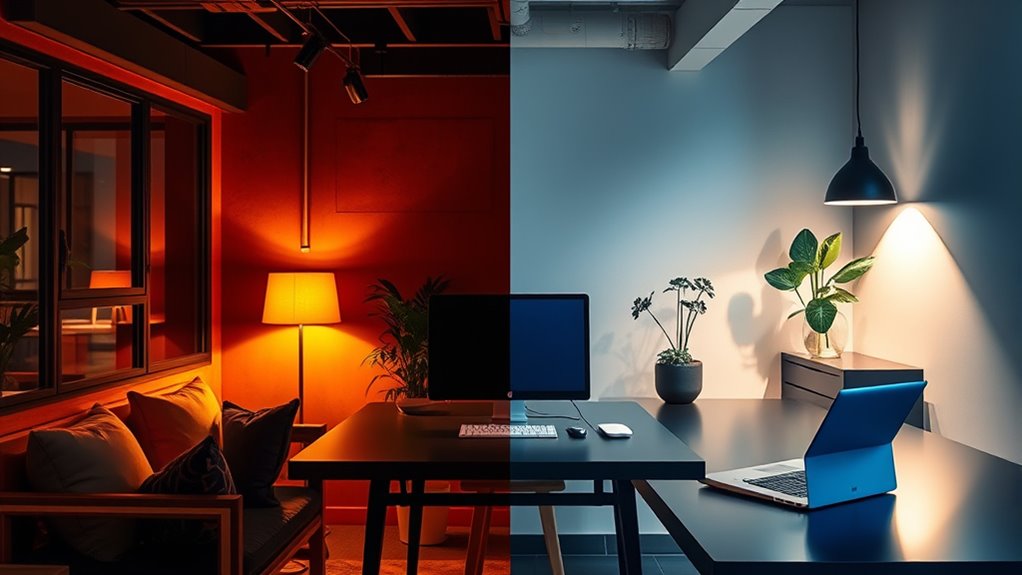
Cool lighting, characterized by shades of blue and white, can substantially impact your mood and level of alertness. In meditation environments, it promotes calmness and focus, helping you stay present and centered. In retail store design, cool lighting creates a sense of cleanliness and modernity, encouraging customers to feel energized and engaged. This type of lighting boosts your alertness, making it ideal for tasks requiring concentration and quick decision-making. It can reduce fatigue and increase productivity by signaling your brain to stay attentive. Additionally, research shows that specific lighting conditions can influence your psychological state and overall well-being. However, prolonged exposure might also cause tension or discomfort if not balanced with warmer tones. Overall, cool lighting influences your mental state by fostering clarity and alertness, making it a powerful tool for both relaxation and productivity.
dimmable ambient lighting for living room
As an affiliate, we earn on qualifying purchases.
As an affiliate, we earn on qualifying purchases.
Visual Clarity and Focus: Benefits of Cool Light

Cool lighting enhances visual clarity by reducing glare and improving contrast, which helps your eyes focus more effectively. Better color rendering under cool light reveals details clearly, making it easier to distinguish subtle differences in objects. Light diffusion minimizes harsh shadows, creating a more even illumination that boosts focus and reduces eye strain. This type of lighting is ideal for tasks requiring precision, such as reading or working on detailed projects. By enhancing contrast and clarity, cool light sharpens your perception of your environment, increasing productivity. Additionally, understanding projector technology can help optimize your viewing experience in a well-lit room.
Creating Cozy Spaces With Warm Illumination

Creating cozy spaces with warm illumination transforms a room into an inviting sanctuary that encourages relaxation and comfort. To achieve this, incorporate decorative lighting like table lamps, candles, or vintage fixtures that emit a soft, amber glow. These elements add visual warmth and create an intimate atmosphere. Warm lighting also enhances textures and colors, making your space feel more welcoming. When choosing bulbs, prioritize energy efficiency to reduce costs and environmental impact without sacrificing warmth. LED options with warm color temperatures provide long-lasting, eco-friendly illumination that complements your decor. Additionally, understanding shark behavior can be helpful if you plan to incorporate natural lighting in spaces near water features or outdoor areas. By blending decorative lighting with energy-efficient choices, you craft a cozy environment perfect for unwinding, socializing, or enjoying quiet moments.
Practical Applications of Warm and Cool Lighting in Different Rooms
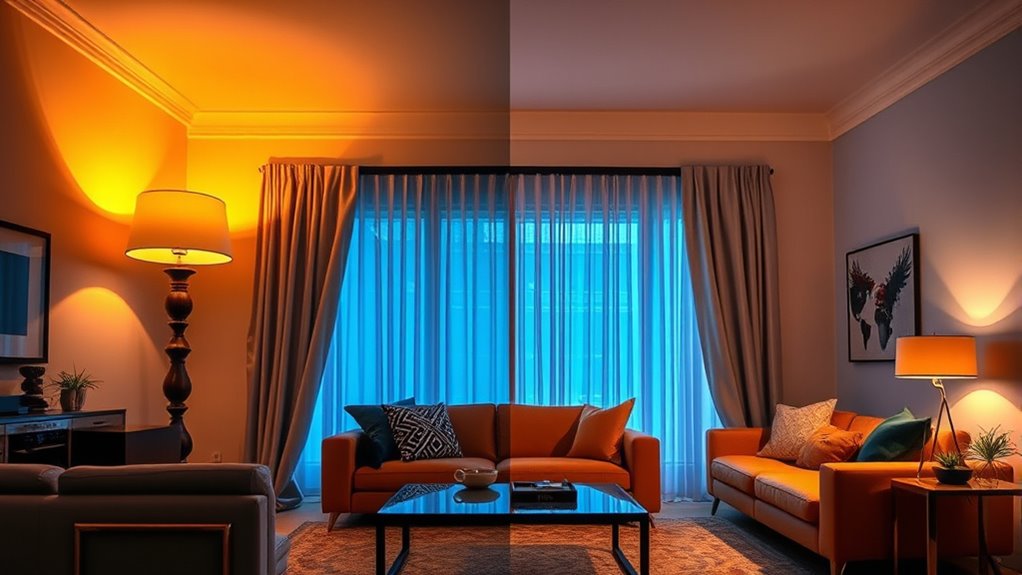
Understanding how to apply warm and cool lighting effectively can considerably enhance each room’s functionality and ambiance. In living rooms, warm lighting creates cozy atmospheres, while cool lighting energizes spaces like kitchens or home offices. For bedrooms, warm lights promote relaxation, and cool lights help with tasks. When choosing LEDs, consider their efficiency and dimming compatibility to suit your needs. Using dimmable LEDs allows you to adjust brightness and mood precisely. Additionally, selecting appropriate eye patch benefits can improve your overall eye health and appearance.
Combining Warm and Cool Lights for Optimal Ambience

By thoughtfully combining warm and cool lighting, you can craft a balanced and versatile ambiance that enhances any space. This approach leverages color mixing to create visual interest and define lighting zones effectively. Consider using warm lights in cozy corners or seating areas to evoke comfort, while cool lights brighten workspaces or modern zones for clarity. Mixing these tones avoids a monotonous look and adds depth. Here’s an example setup:
| Lighting Zone | Recommended Tone |
|---|---|
| Living Area | Warm |
| Kitchen/Workspace | Cool |
| Reading Nook | Warm or Neutral |
This strategic blend assures each zone serves its purpose while contributing to overall harmony. Combining warm and cool lights lets you customize ambiance for different activities and moods seamlessly, allowing for effective zone differentiation.
Tips for Choosing the Right Lighting Based on Room Function
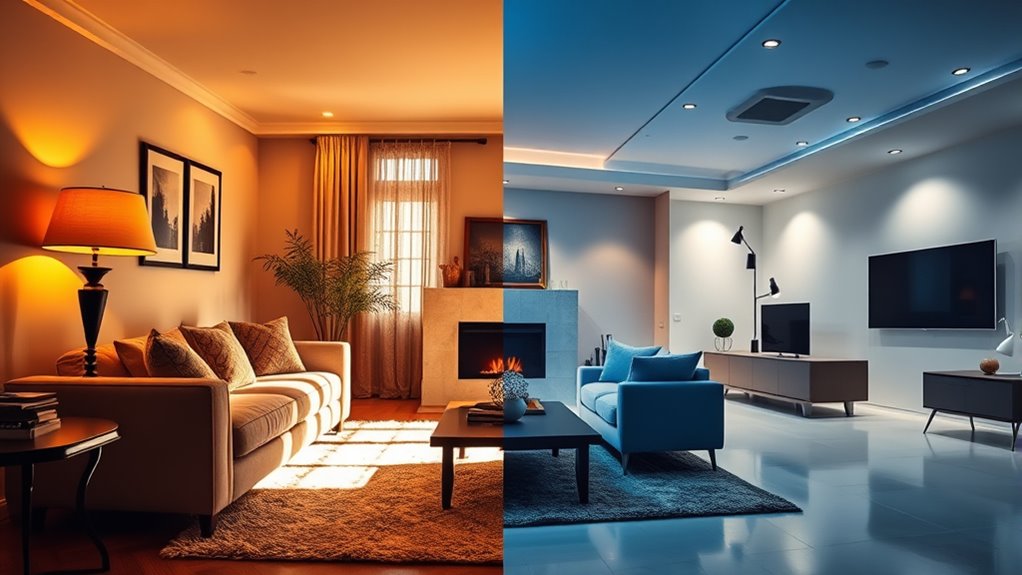
When choosing lighting, consider your room’s purpose and the mood you want to create. Natural light should complement your setup, while task and accent lights highlight specific areas or features. By matching your lighting to these factors, you’ll craft a functional and inviting space. Additionally, selecting appropriate lighting can influence the overall ambiance, making your room feel warmer or cooler depending on your preferences and needs. lighting effects
Room Purpose and Mood
Choosing the right lighting for a room depends heavily on its purpose and the mood you want to create. For meditative spaces, opt for warm, soft lighting to promote relaxation and mindfulness. In energetic environments, cooler, brighter lights boost alertness and activity. Consider how the lighting influences the atmosphere:
- Warm lighting fosters calmness and intimacy
- Cool lighting energizes and sharpens focus
- Adjustable lighting allows flexibility for different activities
- Color temperature impacts emotional response and room functionality
Natural Light Integration
Integrating natural light effectively requires you to contemplate how much daylight a room receives and its intended use. If your space benefits from ample sunlight, consider enhancing daylight with light-colored walls and reflective surfaces to boost daylight enhancement. During dusk-inspired hues, you can create a cozy, warm atmosphere by adjusting window treatments and adding warm-toned accents that complement natural light. For rooms needing focus or alertness, maximize natural light during the day with minimal obstructions. Conversely, in spaces like bedrooms or media rooms, control natural light to prevent glare and maintain comfort. Proper natural light integration ensures your room feels inviting and functional, aligning with its purpose while highlighting the beauty of changing daylight and dusk-inspired hues. Additionally, incorporating self watering plant pots can help maintain healthy indoor greenery without constant attention, especially in rooms with varying light conditions.
Task and Accent Lighting
Effective task and accent lighting can transform a room’s functionality and ambiance by highlighting specific areas and creating visual interest. When choosing lighting, focus on how color contrast impacts mood and visibility, and guarantee lighting symmetry for a balanced look. Proper task lighting is essential for activities like reading or cooking, while accent lighting emphasizes artwork or architectural features. Consider the room’s purpose to select the right intensity and placement. For example, warm light enhances cozy spaces, while cool light boosts alertness in work areas. Keep these tips in mind:
- Use contrasting colors to draw attention and add depth
- Maintain lighting symmetry for harmony and balance
- Combine task and accent lighting for layered effects
- Match light temperature with room function for ideal ambiance
- Understanding lighting effects can help you create the perfect atmosphere for any space.
The Role of Fixtures and Bulb Types in Achieving Desired Effects
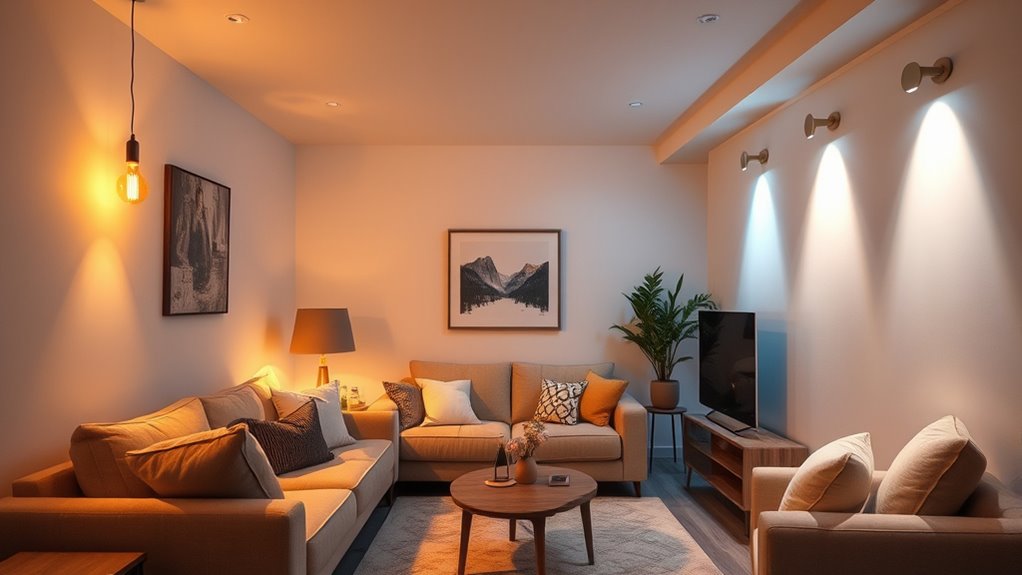
The fixtures you choose can dramatically influence the mood and functionality of your space, especially when paired with the right bulb types. Bright, cool bulbs highlight modern styles, while warm fixtures create a cozy atmosphere. Proper light placement guarantees your lighting effects enhance the room’s purpose and aesthetic. Additionally, understanding the personality traits of different lighting styles can help you select options that align with your desired ambiance.
Fixture Styles and Impact
Choosing the right fixture style and bulb type plays a crucial role in shaping the overall ambiance of a space. The impact of design isn’t just about aesthetics; it influences how light interacts with your environment. Different fixture styles, like pendant lights, chandeliers, or wall sconces, create unique moods by directing light differently. Incorporating dimmable lighting options can further enhance mood versatility and energy efficiency.
- Fixture styles define the room’s character and influence light distribution.
- The impact of design affects how warm or cool tones are perceived.
- Proper fixture placement enhances the desired atmosphere.
- Combining fixtures with specific bulb types can emphasize the ambiance you want to achieve.
Bulb Color Temperature
Bulb color temperature plays an essential role in shaping the mood and perception of your space, especially when paired with the right fixture. Understanding color temperature differences helps you choose between warm tones (around 2700K) and cool tones (around 5000K), which influence ambience and functionality. Warm bulbs create cozy, inviting environments ideal for relaxation, while cool bulbs promote alertness, perfect for workspaces or kitchens. When selecting bulbs, consider bulb lifespan considerations, as some LED options with cooler temperatures may last longer, offering better value. Additionally, the influence of lighting design principles can optimize how the light interacts with the room’s features. The fixture’s design also impacts how the bulb’s color appears and disperses light, so choosing fixtures that complement your desired effect guarantees your lighting setup enhances the room’s overall feel.
Light Placement Strategies
Proper light placement can dramatically influence how your space feels and functions, especially when you select the right fixtures and bulb types. Use decorative lighting strategically to highlight focal points or create cozy corners. Position ceiling fixtures to evenly distribute light and avoid harsh shadows, while accent lights can add depth and interest. Choose energy-efficient bulbs to save on power without sacrificing brightness or ambiance. Consider layering different types of lighting—ambient, task, and accent—for a balanced, inviting environment. Proper placement guarantees your lighting complements your room’s design and mood. Remember, thoughtful fixture selection and positioning can make your space more functional, stylish, and energy-efficient. Additionally, understanding light color temperature can help you achieve the desired ambiance and mood in your room.
Frequently Asked Questions
How Do Warm and Cool Lighting Affect Energy Consumption?
Warm lighting generally uses less energy efficiency and results in lower lighting costs because it often involves lower wattage bulbs or LED options. Cool lighting, while brighter and more energizing, tends to consume more power, increasing your energy bills. If you’re aiming to save on lighting costs, opting for warm lighting can be more cost-effective. However, choose based on your room’s ambiance and functionality to balance energy efficiency with comfort.
Can Mixed Lighting Create Visual Discomfort or Confusion?
Imagine walking into a room where warm and cool lights clash like a bad romance. You’d feel a jarring discord rather than cozy harmony, right? Mixed lighting can indeed create visual discomfort or confusion, sabotaging your efforts at color harmony and mood enhancement. Instead of a relaxing oasis, you get a confusing patchwork that distracts your eyes and hampers the intended ambiance. Keep your lighting styles harmonious for a serene, mood-boosting space.
How Does Lighting Color Influence Perceived Room Size?
Your lighting color greatly influences how large a room feels. Warm color temperatures tend to make spaces feel cozier and smaller, while cool tones create a sense of openness and make a room seem bigger. When you choose lighting based on spatial perception, consider that cooler, bluish hues promote a feeling of spaciousness, whereas warmer hues can shrink the perceived size, affecting how you experience your room’s size and ambiance.
Are There Health Risks Associated With Prolonged Exposure to Cool Lighting?
Like staring at a screen for hours, prolonged exposure to cool lighting can pose health risks. You might experience eye strain and sleep disruption because cool light suppresses melatonin, making it harder to fall asleep. Over time, this can lead to headaches and fatigue. To protect yourself, limit screen time, take regular breaks, and consider using warmer lighting in the evening to promote better sleep and reduce eye discomfort.
What Are the Maintenance Considerations for Different Lighting Colors?
You need to regularly check the bulbs for color fading, which can affect lighting quality over time. Cool lighting bulbs often have a shorter lifespan due to higher energy use, so replace them more frequently. Warm lighting bulbs tend to last longer and maintain their color better. Always clean fixtures to prevent dust buildup, which can reduce bulb efficiency and lifespan. Proper maintenance guarantees consistent lighting and prolongs your bulbs’ usability.
Conclusion
Choosing between warm and cool lighting can totally transform your space—it’s like wielding a magic wand that can turn a dull room into a vibrant sanctuary or a cozy retreat. When you master this power, you’ll never settle for boring lighting again. Whether you crave energy, relaxation, or focus, the right light can make your room feel like a whole new universe. So, go ahead—light it up and watch your space come alive in ways you never imagined!