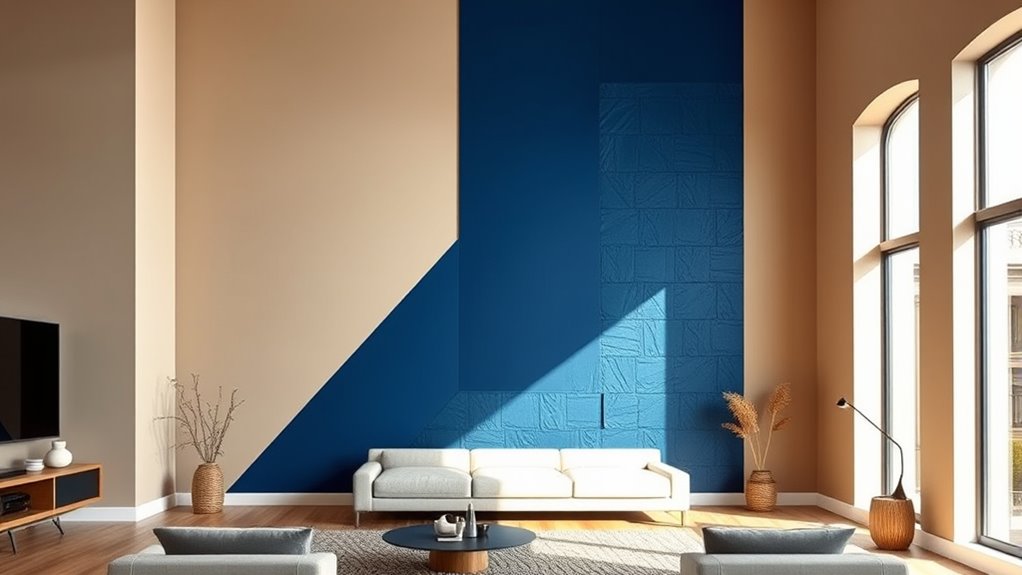

Choosing between accent walls and all-over color depends on your style goals. Accent walls serve as focal points, adding personality and visual interest with bold or contrasting shades, while all-over color creates a seamless, calming atmosphere that makes a space feel larger and more cohesive. If you want flexibility and a subtle statement, accent walls work well. For a uniform, minimalist look, all-over color is ideal. Keep exploring how each option can shape your space’s mood and style.
Key Takeaways
- Accent walls create a focal point and add personality, while all-over color offers a uniform, calming atmosphere.
- Accent walls allow bold color or pattern experimentation; all-over color provides a cohesive, streamlined look.
- Accent walls highlight architectural features and are easier to update with accessories; all-over color enhances overall room harmony.
- Accent walls require careful color selection for contrast; all-over color demands consistency for a clean appearance.
- The psychological impact varies: accent walls add interest, while all-over color promotes calm and unity.

When choosing between accent walls and all-over color, it’s important to contemplate how each option impacts your space’s style and atmosphere. Your choice can markedly influence the room’s mood and visual balance, so understanding their effects is key. Accent walls serve as design focal points, drawing attention and creating a statement without overwhelming the entire room. They allow you to experiment with bold colors or patterns, adding personality and depth to your space. Because of color psychology, an accent wall can evoke specific feelings—blue for calmness, red for energy, or green for serenity—helping you shape the ambiance you desire. This targeted approach makes accent walls particularly effective in highlighting architectural features or artwork, giving your room a curated, intentional look.
In contrast, all-over color blankets the space, creating a uniform look that feels cohesive and harmonious. This approach is ideal if you want a calming, consistent atmosphere or if you prefer a minimalist aesthetic. When you paint the entire room in one hue, it can make the space appear larger and more open, especially if you choose lighter shades. The psychological impact of all-over color depends on your chosen tone; soft neutrals foster tranquility, while vibrant hues energize the environment. Unlike accent walls, all-over color doesn’t single out specific areas but instead envelops the room, influencing the overall mood and making it easier to coordinate with furniture and decor. Additionally, the materials used in painting can affect the finish and longevity of your wall color, ensuring your space remains inviting over time.
Choosing between the two also depends on your decorating style and how much visual interest you want to introduce. Accent walls give you room to incorporate contrasting textures or patterns, making them a focal point that can guide your entire design scheme. They’re an excellent way to add a splash of personality without committing to a full room overhaul. All-over color, however, demands consistency, offering a clean, streamlined look that’s easier to update with accessories rather than repainting. If you’re hesitant about making a bold statement, all-over color provides a safer, more versatile foundation.
Ultimately, your decision hinges on the atmosphere you aim to create and how comfortable you are with bold or subtle design choices. An accent wall commands attention and sets a visual hierarchy, while all-over color fosters a sense of unity and calm. Both options have their benefits, but understanding how they influence your space’s style and mood—through color psychology and focal points—will help you make a confident choice that reflects your personality and enhances your environment.

Pro Grade Paint Roller Kit, Brush & Roller,10 Piece Set, Wall Painting Naps for Professionals & Homeowners – All Paints & Stains, Washable, Reusable, Easy to Clean, Superior Absorbency.
Complete Painting Solution: This ten piece set includes everything for interior paint jobs; use paint brushes for walls…
As an affiliate, we earn on qualifying purchases.
As an affiliate, we earn on qualifying purchases.
Frequently Asked Questions
How Do Accent Walls Affect Room Resale Value?
Accent walls can boost your room’s resale value if you choose a neutral, appealing color that complements the overall decor. They attract buyers’ attention and showcase your style. Just guarantee the paint’s durability is high to maintain a fresh look over time. Proper color coordination with the rest of the home also helps, making the space feel cohesive. Well-maintained accent walls can make your home more attractive to potential buyers.
Can All-Over Color Make a Small Room Feel Larger?
Yes, all-over color can make a small room feel larger by enhancing spatial perception. Light, neutral shades reflect more light and create a sense of openness, aligning with positive color psychology. Avoid dark or overly bold hues that can shrink the space visually. Instead, opt for soft tones that brighten the room and give it a more expansive feel, making your small space seem bigger and more inviting.
Which Option Is More Cost-Effective Long-Term?
All-over color tends to be more cost-effective long-term because it offers better durability and requires fewer touch-ups over time. You’ll save on ongoing maintenance and repainting costs, making it a smarter investment. Accent walls, while cheaper initially, may need frequent repairs or repainting if damaged or faded. So, if you want consistent cost savings, choosing all-over color is the better long-term option for your space.
How Do Accent Walls Impact Different Design Styles?
Accent walls substantially influence different design styles by creating focal points that enhance wall art and reflect your personality. For modern spaces, they add boldness, while in traditional decor, they introduce warmth and depth. Consider color psychology to evoke desired moods, and choose a shade that complements your wall art. This approach keeps your style cohesive, making accent walls versatile for various decor themes, without overwhelming the overall look.
Are There Maintenance Differences Between the Two Choices?
You might think accent walls are more demanding, but they often require less maintenance since you only focus on one area. All-over color demands consistent upkeep to maintain paint durability across the entire wall, and cleaning may be more frequent to prevent wear. With accent walls, cleaning is easier because you only need to spot clean, reducing overall effort. So, your choice impacts ongoing maintenance and the effort needed to keep your space looking fresh.
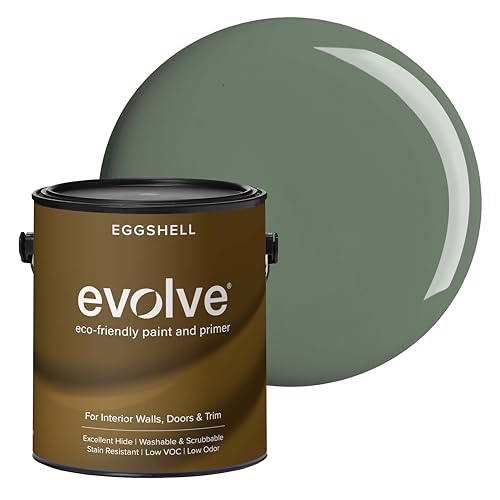
EVOLVE Interior Paint & Primer, Eggshell (Ivy Green), 1 Gallon – One-Coat Coverage, Excellent Hide, Low VOC, Low Odor, Washable Paint for Walls, Doors & Trim
PAINT + PRIMER IN ONE: Evolve’s paint-and-primer formula helps you get great coverage from the start, sealing your…
As an affiliate, we earn on qualifying purchases.
As an affiliate, we earn on qualifying purchases.
Conclusion
Ultimately, choosing between an accent wall and all-over color depends on your style, your space, and your mood. An accent wall offers focus, contrast, and a touch of drama, while all-over color provides uniformity, serenity, and a seamless look. Both options enhance your room’s personality, but only one aligns with your vision. Decide whether you want to highlight, unify, or simply refresh—because understanding your goal makes the perfect choice clear, simple, and satisfying.

qmmp Modern Wooden Wall Sculptures – Set of 3 – Home Decor Accent – Large Wall Art for Living Room, Bedroom, Office – Easy Installation (Oak, Medium – Mountain and Sun)
🖼️ [ELEVATE YOUR DECOR WITH TIMELESS ELEGANCE] : Transform your space with captivating modern wall sculptures designed to…
As an affiliate, we earn on qualifying purchases.
As an affiliate, we earn on qualifying purchases.

4 Rolls Premium Painters Tape, Blue Tape, Masking Tape, Paint Tape for Multi-Purpose, Painting, Painter's, DIY Crafts Arts (88yd =0.94IN*22yd*4) Decoration Labeling No Residue, Easy Removal
Professional Mask Tape – Multi-Surface adhesive tape made of high quality blue crepe paper not easy to lift…
As an affiliate, we earn on qualifying purchases.
As an affiliate, we earn on qualifying purchases.