TL;DR

Get furniture and decor delivered free with Prime
- Fast, free delivery on millions of items
- Prime Video, Amazon Music and more included
- Member-only deals all year
Hunker describes a DIY method for adding empty wooden picture frames to closet doors to imitate decorative molding. The approach avoids cutting trim to size, but still requires layout planning, attaching the frames, and priming and painting the frames and door.
Hunker has reported on a do-it-yourself closet-door update that uses empty wooden picture frames to mimic the look of picture-frame molding. The approach offers homeowners a way to add visual detail to plain or dated doors without measuring and cutting molding, although the frames still need to be fitted, attached, primed and painted.
The method repurposes large-format picture frames as ready-made decorative panels. Hunker cites frames around 11 by 14 inches as one possible size, while noting that the right proportions depend on the door and the desired layout. The report also points to DIY creator curatedbyconstance as an example of people using actual frames for the effect; it does not provide project measurements or a cost estimate.
Before buying frames, the report recommends laying out possible positions with painter’s tape. This lets a homeowner compare frame sizes and spacing on the door before committing. A level and tape measure can help establish the final arrangement. Hunker says there is no fixed spacing rule, though it mentions a design suggestion of roughly three to four inches around frames and between them on walls; that is offered as a reference, not a required measurement for every door.
For the frames themselves, Hunker favors wood because it is durable and can be painted or repainted. It advises checking that each frame sits flat, then removing its glass and backing before installation. The report names wood glue and brad nails as possible attachment methods, similar to methods used for trim. The door and frames then need primer and paint to create a unified finish.
A Trimmed Look Without Cutting Molding
The appeal is practical: decorative detail can change the appearance of an interior door without replacing it or cutting custom trim pieces. Using frames as preassembled shapes may simplify one part of the job, particularly for people without the tools or confidence to make accurate molding cuts. It does not eliminate the work of planning a balanced layout or securing the pieces safely.
The idea may also make a modest refresh more accessible because wooden frames are sold by craft and discount retailers, which Hunker suggests checking for sales. However, the source provides no confirmed project price, and costs will vary with the number and size of frames, paint, fasteners and supplies already on hand. The technique is a cosmetic update, not a repair for damaged doors or hardware.
wooden picture frames for DIY closet door decor
As an affiliate, we earn on qualifying purchases.
As an affiliate, we earn on qualifying purchases.
From Wall Panels to Closet Doors
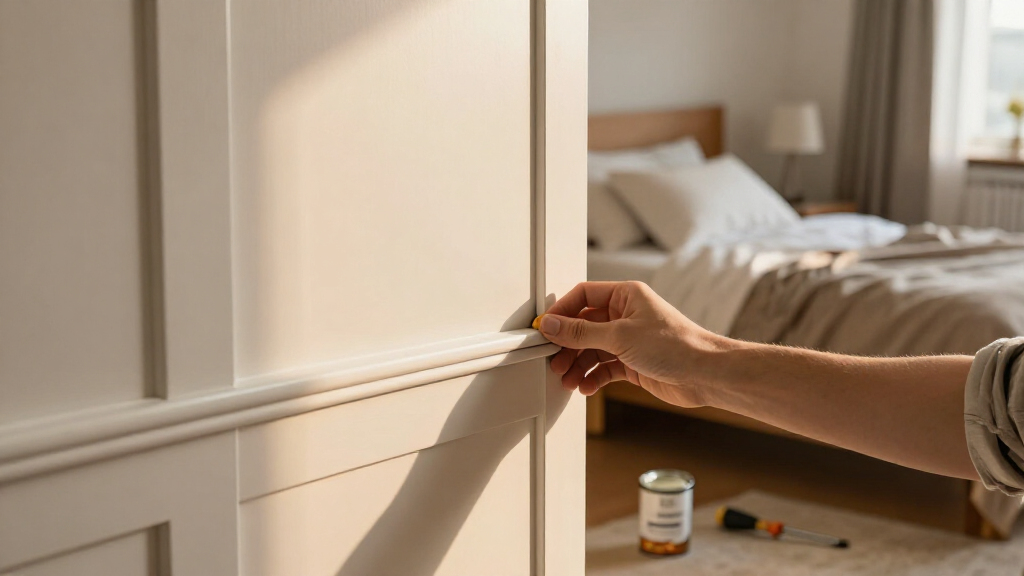
Picture-frame molding is commonly used to add panel-like detail to walls, and Hunker says the same visual approach can be applied to interior doors. Traditional molding work involves measuring, cutting and fitting trim. The reported hack substitutes whole picture frames for those cut pieces, using their outer profiles to create a similar outlined-panel effect.
The source frames the project as one option for doors that look plain or dated. It does not report a formal product launch, a building-industry change or a measured trend; the news peg is a home-improvement report describing a DIY technique and its practical steps. The finished result depends on the frames’ proportions and profile, the door’s surface, and how consistently the pieces are placed and painted.
““Large-format wall frames, such as those measuring 11 by 14 inches, are just the right size and proportion to easily mimic decorative molding.””
— Hunker
Fit, Cost and Finish Depend on the Door
The source does not establish that the technique works equally well on every closet door. Door dimensions, surface condition, existing finish, frame depth and hardware placement may affect whether a layout fits and how the frames can be attached. Hunker does not provide a tested load or durability assessment, nor does it specify which adhesive or nail length is appropriate for different door constructions.
It is also unclear how much the project costs or how long it takes. The report offers no controlled comparison with installing molding and does not quantify the claimed time savings from using frames. Homeowners should check that the frames sit flat, keep the doorknob clear, and choose attachment methods suitable for their door. The source’s example spacing is design guidance rather than a guarantee of a balanced result.
Plan and Test Before Attaching
For anyone considering the update, the next step is to test the layout with painter’s tape and confirm that the selected frames fit the door, clear the knob and sit flat. After choosing a spacing, measure and level the placement, remove the frames’ glass and backing, and use an attachment method suited to the door. Prime and paint the door and frames for a consistent appearance.
The supplied report does not identify a scheduled follow-up, product release or independent evaluation. The outcome remains a project-by-project DIY decision: the door’s condition, materials and desired finish will determine whether using frames is a practical alternative to conventional trim.
Key Questions
How does the picture-frame closet-door hack work?
It uses empty picture frames attached to a door to imitate decorative molding. The frames’ glass and backing are removed, and the frames and door are primed and painted.
What kind of frames does Hunker recommend?
The report favors wood frames because they are durable and paintable. It suggests considering curved, rounded or beveled profiles for a more traditional molding effect, and checking that frames lie flat.
How should the frames be arranged?
Use painter’s tape to test a layout, then check placement with a level and tape measure. Hunker mentions three to four inches as a wall-design spacing suggestion, but says there is no fixed spacing rule for this project.
Does this method avoid painting?
No. Hunker says the frames and closet door still need primer and paint. Painting helps give the added frames and the existing door a unified finish.
Source: rss
Halloween Picks
halloween
As an affiliate, we earn on qualifying purchases.