
TL;DR

Get furniture and decor delivered free with Prime
- Fast, free delivery on millions of items
- Prime Video, Amazon Music and more included
- Member-only deals all year
A homeowner named Ethan discovered his 21-year-old water heater had rusted out and flooded his utility closet floor, according to Family Handyman. Plumbers reviewing the case said he handled the emergency mostly correctly but missed key safety steps, and that anode rod replacement and leak-detection devices could prevent similar failures.
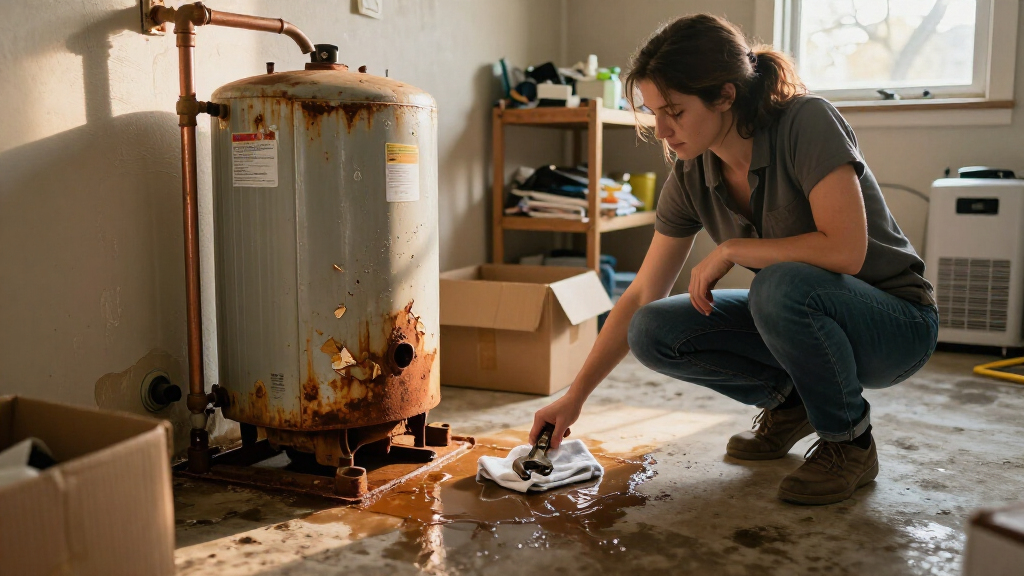
A Minnesota homeowner identified only as Ethan discovered a puddle covering most of his utility closet floor last month after the 21-year-old water heater tank rusted out, forcing a full replacement and exposing a cascade of secondary problems, including a faulty shutoff valve that required shutting off the home’s main water supply, according to a Family Handyman report. The account, reviewed by three plumbers, has drawn attention because it illustrates how aging water heaters fail and how quickly response time determines the cost of the damage.
According to the report, Ethan first noticed the problem when the bathtub water for his young daughter was not hot. Opening the utility closet, he found water across the floor and identified a rusted-out tank as the cause. His first steps were to close the supply line valve and connect a hose to the tank’s drain spigot. When water continued draining after a trip to the home improvement store, he realized the supply line valve was not sealing and shut off the main water supply to the house. He installed the new heater the next morning.
Plumbers consulted by Family Handyman said the failure was predictable. Gas and propane water heaters typically last 10 to 15 years before corrosion ends their service life, and Ethan’s tank was 21 years old. The experts also noted that Minnesota’s cold climate forces water heaters to work harder, likely compounding the wear.
One safety misstep stood out to all three plumbers: Ethan did not shut off the gas or electricity to the water heater before working on it. The report notes that water heaters can pose electrocution and fire hazards if mishandled, and in extreme cases an empty tank that keeps heating can explode.
Why Aging Tanks Are a Widespread Risk
Water heater failures are among the most common and expensive household disasters because they combine sudden water release with delayed detection. According to figures cited in the report, a DIY replacement runs about $700, while a professional installation costs $1,500 to $3,500. An unaddressed leak, by contrast, can cause water damage and mold remediation costs running from the thousands to tens of thousands of dollars.
The case also highlights risks specific to older housing stock. Ethan’s 1940s bungalow likely uses a gate valve rather than a ball valve for the main shutoff, according to plumber Kolby Barnes — and gate valves are vulnerable to the same mineral buildup that can stop them from closing. Homeowners in older homes may face compounding failures during exactly the moments when they most need their shutoffs to work.
What the Plumbers Recommended Instead
The report emphasized prevention over reaction. Replacing a water heater’s internal anode rod, which slows tank corrosion, every few years can extend the unit’s life at a cost of $20 to $50 as a DIY job, or $150 to $600 professionally. Replacing a failing valve costs roughly the same, according to the report.
Barnes also recommended installing a smart leak-detection device that can monitor for leaks and automatically shut off water in an emergency. “The smart device isn’t necessarily a mistake on his part, since such devices are relatively new,” Barnes said, “but now that your readers know about them, it would be a mistake not to consider installing one to prevent both catastrophic leaks and slow, hidden ones.”
The report’s “Panic Meter” rated the job as dependent on skill level: plumber Brendan Tonks advised against DIY replacement because of the gas and electrical components involved, while Ethan estimated it as a two to two-and-a-half-hour job with a helper.
“That’s your only move, and hesitating even 10 minutes can mean hundreds of gallons on the floor.”
— Brendan Tonks, plumber
Unverified Details and Ongoing Questions
The report is based on the homeowner’s own account and does not independently verify the timeline or the condition of the equipment. The extent of the basement damage and the final repair cost were not fully detailed, and the source material was truncated, leaving parts of the expert guidance incomplete. Whether Ethan’s main shutoff is definitively a gate valve was described as likely given the home’s 1940s construction, not confirmed. Because only a first name was provided, the homeowner’s identity and location beyond Minnesota could not be verified.
Steps Homeowners Can Take Now
Based on the experts’ guidance, homeowners with tanks older than about ten years should inspect or replace the anode rod, test supply line and main shutoff valves, and consider a smart leak-detection shutoff device. Any work involving gas lines or electrical connections should be handled by a licensed professional, and power or gas to the unit must be disconnected before anyone touches the tank. The report advises knowing the location of the main water shutoff before an emergency, since response time directly affects how much water ends up on the floor.
Key Questions
How long do water heaters typically last?
According to plumbers cited by Family Handyman, gas and propane water heaters typically last 10 to 15 years before corrosion causes failure. Cold climates like Minnesota’s can shorten effective service life because the units work harder.
What should I do first if my water heater is leaking?
The experts said to shut off the gas or electricity to the unit first to prevent electrocution, fire or explosion hazards, then close the supply line valve. If that valve fails to seal, shut off the home’s main water supply immediately.
Should I replace a water heater myself or hire a pro?
The plumbers recommended professional installation because water heaters involve gas and electrical components that can be dangerous if mishandled. The homeowner in the report completed the job himself in about two to two-and-a-half hours, but the professionals cautioned against it.
How can I prevent a water heater from rusting out?
Replacing the internal anode rod every few years can extend tank life, at a cost of about $20 to $50 as DIY or $150 to $600 professionally. A smart leak-detection device can also shut off water automatically if a leak starts.
How much does water heater failure cost if not caught quickly?
A DIY replacement runs about $700 and professional installation $1,500 to $3,500, per the report. Unaddressed leaks can cause thousands to tens of thousands of dollars in water damage and mold remediation.
Source: rss
Halloween Picks
halloween
As an affiliate, we earn on qualifying purchases.