
TL;DR
Interior designers Phoebe Hollond and Natasha Lyon have used split or multi-panel artworks to conceal televisions when they are switched off. The panels pull apart to reveal the screen, combining a decorative cover with a practical way to make the TV less prominent. The source describes bespoke projects, not a standard product or measured mental-health benefit.
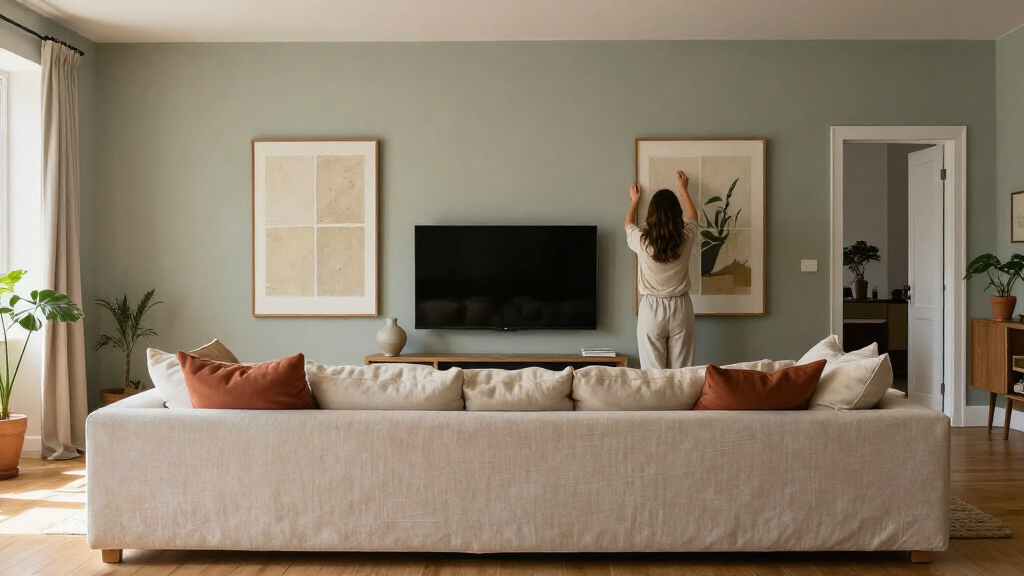
Interior designers Phoebe Hollond and Natasha Lyon have used split artworks to cover wall-mounted televisions, allowing the panels to sit together as a decorative piece and pull apart when the screen is needed. The approach addresses a familiar design problem: a large, dark TV can dominate a living room even when it is switched off.

Get furniture and decor delivered free with Prime
- Fast, free delivery on millions of items
- Prime Video, Amazon Music and more included
- Member-only deals all year
The covers described in the source are made for individual projects, rather than presented as a single off-the-shelf product. In the closed position, two or more artwork panels conceal the television; when viewers want to watch, they move the panels apart to expose the screen. The design therefore treats the TV as part of the room’s visual layout without requiring its permanent removal.
Hollond, of Studio Hollond, said she used a celestial map for one project, splitting a print showing the positions of fixed stars relative to the ecliptic in 1730 across the two panels. She described the subject as a reflection of her interest in astrology. The source does not give measurements, materials, installation details or a price for the work.
Lyon’s project took a more collaborative route. She worked with Paris-based artist Andrea Mongenie on eight bespoke artworks that function together as a television cover. The source frames the project as a way to bring color and original artwork into the room while concealing the screen. It does not specify how the eight pieces are arranged or operated.
Make the TV disappear behind split artwork
Designers Phoebe Hollond and Natasha Lyon use movable artwork panels to conceal televisions when they are switched off. The screen stays available while the artwork becomes part of the room.
How the cover works
Panels sit together over the screen, then move apart for viewing.
The artwork conceals the television when it is not in use.
Move the panels apart to watch TV.
Two bespoke approaches
A celestial map
Phoebe Hollond split a print of fixed stars relative to the ecliptic in 1730 across two panels.
Eight artworks
Natasha Lyon worked with Paris-based artist Andrea Mongenie on eight bespoke pieces.
A reversible design choice
The TV remains in the room, but becomes less visually prominent when covered.
- Artwork conceals the dark screen.
- The cover adds color and personal meaning.
- Panels move apart for viewing.
- The television stays available.
Other ways to hide a TV
Designers also use furniture and wall-mounted pieces to integrate screens.
A TV Cover That Doubles as Art
The idea matters to readers who want a living room to serve both as an entertainment space and as a place for conversation or relaxation. A large black screen can compete with artwork and other design choices, while leaving the TV uncovered may be the most convenient option for everyday viewing. A movable cover offers a reversible middle ground: the television remains available, but it is less visually prominent when not in use.
The projects also show how a practical fixture can become part of a room’s decor rather than something designers try to disguise with a plain cabinet. A chosen print, map or commissioned artwork can add color and personal meaning. Lyon connected the approach to reducing visual noise, but that is her design rationale, not evidence that the covers produce a specific mental-health outcome. Their clearest confirmed benefit is visual: they hide the screen when the panels are closed.
Products Worth Considering

Shark HydroVac MessMaster Cordless Wet Dry Vacuum and Mop Combo, AW261

TCL F8D Series 65-Inch 4K UHD QLED Smart Fire TV, 144Hz, HDR (65F8D, 2026)

Sonos One Two-Room Smart Speaker Set with Alexa, Black
As an affiliate, we earn on qualifying purchases.
Other Ways Designers Conceal Screens
Hollond and Lyon have used other methods to integrate televisions into interiors. Hollond said she has made furniture with automated lifts, allowing a TV to rise for viewing and lower out of sight afterward. Lyon cited options including a bi-fold cabinet, large artwork mounted on a media unit and tapestry wall hangings.
Those approaches vary in how much they conceal the television and how they operate. A split-artwork installation makes the cover itself visible as a decorative feature, while a lift or cabinet can hide the screen within furniture. The source presents the multi-panel format as a more theatrical alternative, but provides no comparison of costs, durability or ease of installation.
“TVs on the whole are ugly; they are not something you should have on your walls, so why not put them in a TV box and hide them with a piece of art.”
— Phoebe Hollond, Studio Hollond
Practical Details Remain Unreported
The source describes design examples but does not say whether the artworks are available to buy, how much they cost, or whether either designer offers a repeatable product. It also does not explain the mounting system, how the panels move, how they avoid obstructing the screen, or whether the work requires custom measurements for each TV.
No independent testing or client feedback is included. Claims that concealing a television can support a calmer or more wellness-oriented home reflect the designers’ views; the source does not establish a measurable psychological effect. It is also unclear how the installations accommodate different screen sizes, wall layouts or access to cables and controls.
Custom Design Is the Next Step
The source names no upcoming launch, release date or planned expansion. For now, the examples point to a bespoke design approach: homeowners interested in the idea would need to ask an interior designer or artist about artwork dimensions, panel movement, mounting and compatibility with their television and room.
Any future product or project details would clarify whether split artwork can become a readily available alternative to cabinets and lift systems. Until then, the practical questions—especially price, installation and the range of screens it can cover—remain open.
Key Questions
How does a split artwork conceal a television?
Two or more panels sit together in front of the screen when the TV is not being used. The panels are moved apart to reveal the television for viewing.
Are these split-artwork covers available as a standard product?
The source describes bespoke design projects by Phoebe Hollond and Natasha Lyon. It does not identify a standard product, retailer or price.
What artwork did the designers use?
Hollond used a celestial map based on the positions of fixed stars relative to the ecliptic in 1730. Lyon collaborated with Paris-based artist Andrea Mongenie on eight artworks for a separate project.
Does hiding a TV improve mental health?
Lyon said she considered mental health and distractions in her design work, but the source provides no research showing that a television cover produces a measurable mental-health benefit.
Source: livingetc.com