
TL;DR
An archival image from 1977 shows Paul and Linda McCartney’s kitchen with dark subway tiles and pale grout, a look that remains recognizable in contemporary homes. Design experts cited by Homes & Gardens say changes in tile color, layout and grout help keep the format adaptable, with green shades and layered materials among trends expected for 2027.
A 1977 archival image of Paul and Linda McCartney’s kitchen shows dark subway tiles set against white grout, a combination that remains recognizable in kitchens today. Homes & Gardens uses the room to illustrate how a familiar tile shape can take on different looks through choices of color, grout and layout.

Get furniture and decor delivered free with Prime
- Fast, free delivery on millions of items
- Prime Video, Amazon Music and more included
- Member-only deals all year
The kitchen walls in the image are covered in dark, rectangular subway tiles with contrasting white grout. The photograph is nearly five decades old, but the pairing of dark tile and light joints is still used as a design reference. The image offers a specific example of the style in a celebrity home; it does not establish how common subway tiles were in kitchens at the time.
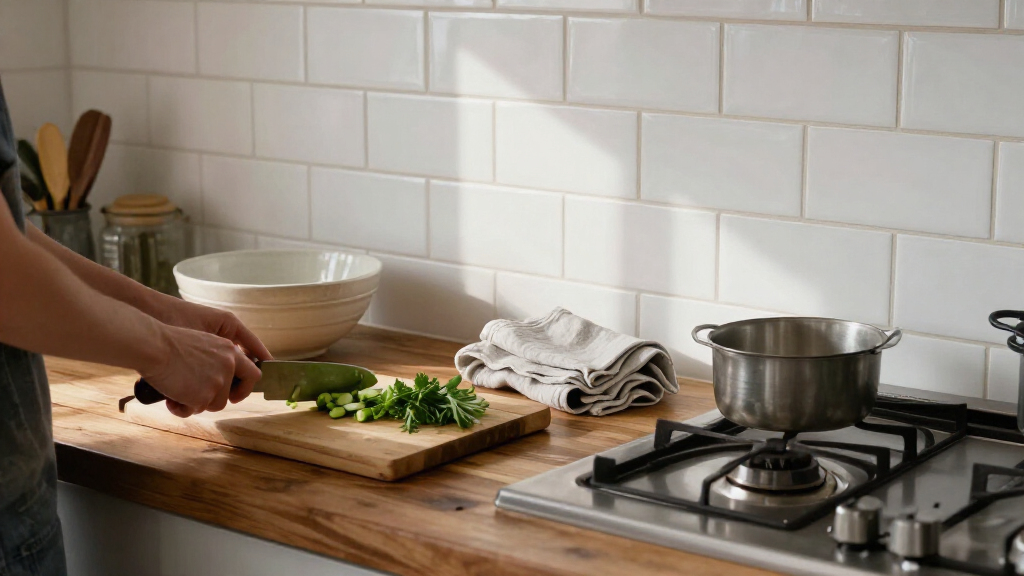
Lauren Murphy, identified by Homes & Gardens as a design and trends expert at Waxman Ceramics, says the format remains relevant because it can be changed through tile color, grout and arrangement. She contrasts a traditional white tile with dark grout with a soft-colored tile installed in a stacked pattern, noting that each produces a different effect.
The article also points to practical ways homeowners can use the look, from peel-and-stick products to bespoke, handcrafted tiles. It does not provide installation guidance or assess the durability of particular products. Its central design point is that the tile shape is not tied to one period or one palette.
A classic tile shape keeps changing
A 1977 image of Paul and Linda McCartney’s kitchen shows dark subway tiles with white grout. The familiar format still adapts through color, grout and layout.
One shape, different effects
Design expert Lauren Murphy says changing the finish or arrangement can transform the look.
- Dark rectangular tiles
- Contrasting white grout
- Soft-colored tile
- Stacked layout or different grout
A more layered outlook
Industry experts expect varied textures and natural materials to shape some 2027 interiors.
Green shades
Isabel Fernandez expects interest in soft sage and deeper moss tones.
Texture and timber
Warm timber and decorative details could bring a more personal, layered feel.
Choose the look that fits
Subway tiles can suit different tastes without recreating an entire 1970s room.
Decide whether you want dark tile with pale grout or a softer combination.
A different arrangement can change the effect of the same tile shape.
Consider how tile might sit alongside timber and other materials.
How One Tile Style Keeps Changing
The McCartneys’ kitchen is a useful reference because it shows that subway tiles can feel period-specific without being limited to a period. Dark tile and white grout give the 1970s room a distinctive contrast, while the same basic format can be reworked with lighter colors, different spacing or a new grout shade. For readers planning a kitchen update, that flexibility can make the tile a design choice that is easier to adapt as tastes change.
Homes & Gardens connects the example to a broader turn toward texture, variation and mixed materials in kitchens. If that outlook continues into 2027, tile decisions may be part of a more layered scheme rather than an attempt to make every surface match. That is a design forecast, not a guarantee about what homeowners will choose or what the market will favor.
Products Worth Considering

Hisense E6 Cinema Series 85-Inch 4K UHD Hi-QLED Smart Fire TV

Levoit Core 300S-P Smart Wi-Fi Air Purifier

Levoit Vital 100S-P Air Purifier with Washable Pre-Filter
As an affiliate, we earn on qualifying purchases.
From 1977 Tiles to 2027 Palettes
The article places the kitchen image amid renewed interest in several 1970s interior features, including stainless-steel countertops, burnt-orange appliances and rattan furniture. It singles out subway tiles as an element that can carry over without reproducing an entire decade’s look. The distinction matters: the image is historical, while its relevance to current homes comes from the format’s ability to be styled in different ways.
Isabel Fernandez, identified as director at Quorn Stone, expects homeowners in 2027 to be more confident combining textured surfaces, warm timber and decorative details. She describes a direction toward rooms that feel layered and personal rather than perfectly matched. Fernandez also points to green as a color gaining attention, including soft sage tiles in kitchens and deeper moss-green metro tiles in bathrooms, paired with natural materials. These are her expectations, not confirmed sales figures or a survey of homeowner plans.
“Subway tiles may be a classic, but their versatility keeps them relevant.”
— Lauren Murphy, design and trends expert at Waxman Ceramics
What the Image Cannot Confirm
The image documents the McCartneys’ kitchen in 1977, but the material provided does not identify who designed or installed it, when the tiles were fitted, or whether the room has since been altered. It also does not establish whether subway tiles were especially widespread in 1970s kitchens or how the McCartneys chose the finish.
The 2027 comments are industry forecasts. No market data, homeowner survey or sales figures are supplied to show how broadly green tiles or mixed-material schemes are being adopted. The discussion also does not compare the cost, maintenance needs or lifespan of peel-and-stick, standard or handcrafted tile options.
Design Choices to Watch in 2027
No specific product launch, renovation or follow-up announcement is attached to the archival image. The next developments discussed are design choices homeowners may make as they plan future kitchens: varying tile color and layout, pairing tile with warm timber, and considering greens such as sage or moss. These remain projected directions, not confirmed outcomes.
For readers considering the look, the example suggests starting with the room’s materials and desired contrast rather than treating subway tile as a fixed 1970s recipe. Whether a project uses a dark tile with pale grout, a softer color, or a different arrangement will depend on personal preference and the space. The available information does not specify installation requirements or provide product recommendations.
Source: Homes & Gardens
Key Questions
What do Paul and Linda McCartney’s kitchen tiles look like?
The 1977 archival image shows dark subway tiles on the kitchen walls with contrasting white grout.
Why are subway tiles still used in kitchens?
Design expert Lauren Murphy says their look can change substantially with different colors, grout and tile layouts, allowing the format to suit a range of interiors.
What kitchen tile colors are forecast for 2027?
Isabel Fernandez expects more interest in green shades, including soft sage and deeper moss tones, alongside natural materials. This is her forecast, not a verified market trend.
Does the article confirm the McCartneys’ kitchen is unchanged?
No. The image shows the kitchen in 1977, but the available details do not say whether the room or its tiles have changed since then.
Source: Homes & Gardens