
TL;DR

Get furniture and decor delivered free with Prime
- Fast, free delivery on millions of items
- Prime Video, Amazon Music and more included
- Member-only deals all year
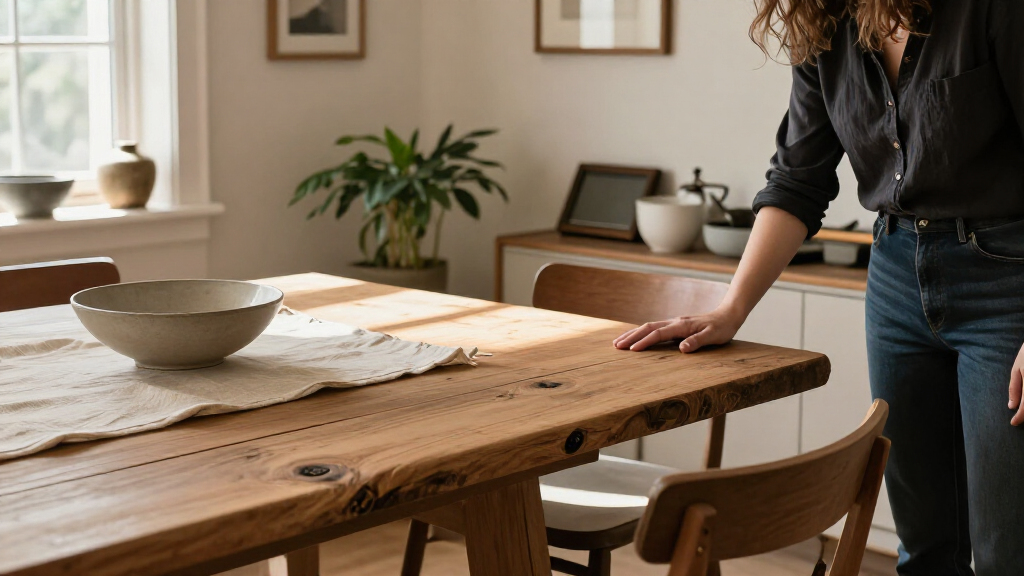
Interior designers are incorporating tables with carved, hammered or otherwise textured edges into projects, using the finish to contrast with smooth, minimal surfaces. Designers say the look suits natural materials such as wood and stone, but recommend using it selectively; maintenance can be more difficult.
Interior designers are adding tables with rough, textured edges to residential projects, using carved or hammered wood and stone to bring an organic contrast to rooms dominated by smooth finishes. A Livingetc report documents the look across dining, coffee and side tables, while designers interviewed for the story recommend using the detail selectively because it can be harder to clean.
The finish ranges from edges shaped to resemble natural fractures to deliberately carved or hammered surfaces. In one example, Australian designer Adyn Kelly paired a travertine top with chrome legs: the contrast places a jagged, organic-looking edge against a precise, machined base. Kelly said the top was intended to appear to float above the legs.
Steffanie Ball, co-founder of furniture brand En Gold, described the appeal as preserving rather than disguising the irregularities of natural stone. She said a rough edge can add warmth and character in a room with clean lines. The report also features En Gold’s La Via dining table, whose stone edge was designed to feel natural alongside a calm, architectural form.
The look is not limited to dining tables. Sydney designer Yasmine Ghoniem suggested using texture on coffee-table edges or legs, and potentially on bedside consoles or wardrobe fronts. Kelly pointed to plinths, benches and powder-room vanities as other options, particularly where the surface is seen more than handled. Ball advised repeating materials or textures in a restrained way, including through smaller stone objects.
A Textural Counterpoint to Smooth Rooms
The trend offers designers a way to add visual and tactile contrast without introducing a new color or an elaborate pattern. A rough edge can interrupt a room of polished stone, glass, metal and clean lines, while keeping the palette and materials relatively simple. That can make a space feel more layered, according to the designers quoted by Livingetc.
There is also a practical difference between choosing a textured edge and a smooth one. The finish is meant to be noticed up close and may collect dirt or be less straightforward to wipe down. Kelly’s advice to use it on surfaces that are primarily viewed, and Ball’s preference for a few carefully placed pieces, reflect that trade-off. The design choice is best understood as a detail with both a visual effect and a maintenance cost, rather than a finish suited to every table.
handcrafted textured edge dining table
As an affiliate, we earn on qualifying purchases.
As an affiliate, we earn on qualifying purchases.
From Stone Dining Tops to Small Accents
Livingetc frames rough-edged tables as a detail appearing across more than one kind of furniture, rather than as a single product launch. Its examples include a hand-drawn, water-cut travertine edge by Kelly, an En Gold stone dining table, and a round table in an Ibiza project by Paris-based designer Emmanuelle Simon. The examples vary in material and technique, but share a contrast between irregular texture and more controlled forms.
The report’s designers connect the look to a wider preference for natural materials and handcrafted details. That is their interpretation, not a measured claim about the design industry as a whole. The source provides project examples and professional opinions, but does not include sales figures, survey results or other data showing how widely the finish is being adopted.
“I think we’re naturally drawn to pieces that tell a story, and a rough-edged table does exactly that.”
— Steffanie Ball, co-founder of En Gold
How Broad Is the Design Trend?
The report does not establish how common rough-edged tables are across the interiors market, or whether demand is growing. It offers selected projects and comments from designers and furniture makers, but no market figures or consumer research. The source also does not compare cleaning requirements across different materials or edge treatments; the practical upkeep will depend on the specific piece and finish.
Where Designers May Use Texture
The source identifies coffee tables, consoles, plinths and smaller stone accessories as ways to try the look without making a dining table the centerpiece of a room. It does not announce a product release or provide a schedule for further developments. For homeowners considering the finish, the designers’ guidance is to match it to the room’s materials, use it sparingly and weigh the desired tactile effect against cleaning needs.
Key Questions
What is a rough-edged table?
It is a table with an edge that has been carved, hammered or otherwise textured, often in wood or stone, rather than finished as a smooth, uniform line.
Why are designers using textured table edges?
The designers quoted by Livingetc say the finish adds contrast, warmth and tactile interest, particularly in rooms with smooth surfaces and clean lines. Those are professional views, not findings from market research.
Where can the look be used besides a dining table?
Designers suggest coffee tables, consoles, plinths, benches and powder-room vanities. Ball also recommends smaller accents such as stone bowls or sculptural objects.
Are rough-edged tables harder to maintain?
The report says this finish is not the easiest to clean. How much care a particular table needs will depend on its material and treatment; the source provides no maintenance comparison.
Source: rss
Columbus Day / Indigenous Peoples' Day Picks
long weekend sales
As an affiliate, we earn on qualifying purchases.