TL;DR

Get furniture and decor delivered free with Prime
- Fast, free delivery on millions of items
- Prime Video, Amazon Music and more included
- Member-only deals all year
An article in Veranda examines how artwork at home may influence mood through color, shape and personal associations. Art historian Susie Hodge and decorator Cameron Jones say responses differ from person to person, so choosing art around how a room should feel is a personal decision, not a guaranteed emotional effect.
A report by Veranda explores how art displayed at home may shape people’s emotions, drawing on comments from art historian and author Susie Hodge and decorator Cameron Jones. They describe color, shape and personal associations as possible influences on mood, while stressing that individual reactions vary and no artwork produces the same response in everyone.
Hodge says that seeing art a person finds pleasing can produce a dopamine rush, and likens a strong positive response to the euphoria associated with love. The report presents this as Hodge’s explanation, not as a measured result from a study described in the article. It does not cite research establishing how often, or how strongly, art changes mood in domestic settings.
Jones says she asks clients how they want to feel in a room before choosing its design. In bedrooms, she suggests that greens, blues and neutral shades may suit a calm atmosphere. For a breakfast room meant to feel lively, she points to yellow; red or orange artwork could add warmth and color to a dining space. She says art can introduce a desired color without requiring a brightly painted wall or a wholesale change to the furnishings.
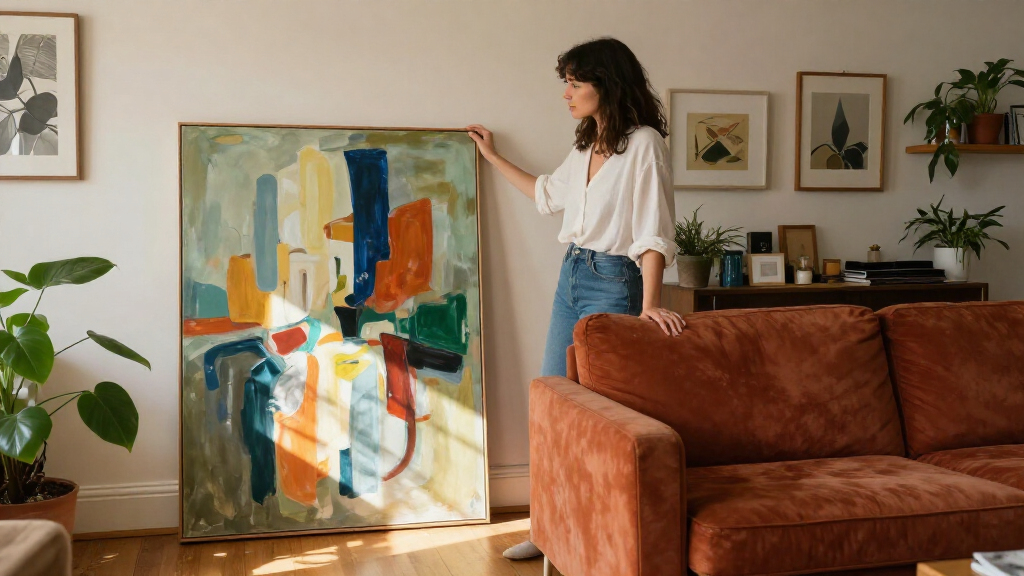
Both experts emphasize that visual qualities can affect people differently. Jones says clients often respond calmly to abstract work with rounded shapes and soft lines. Hodge says smooth lines, circles, horizontal forms and softer colors may feel peaceful, while angular shapes and bold patterns could energize one viewer and unsettle another. The report also notes that memories and personal experiences influence interpretation: a painting that pleases one person might cause anxiety in someone else.
Choosing Art for Everyday Moods
Artwork is a visible part of a home, and people may use it to make a room feel more restful, lively or personally meaningful. The experts’ advice offers a practical way to think about purchases: start with the atmosphere a person wants, then consider whether the piece’s colors and forms suit that intention. Jones’s examples also suggest that a small work of art can add color without making a room’s entire palette more intense.
The report’s main qualification is just as relevant: these are suggestions, not universal rules. A soothing blue or soft abstract may not feel calming to every resident, and an energetic color may be welcome in one household but distracting in another. Viewers’ memories, taste and associations can matter as much as design conventions. That makes personal response a useful guide, rather than a guarantee that a particular work will improve someone’s mood.
Products Worth Considering

Philips Hue Secure Starter Kit with Contact Sensors, Motion Sensor, Bridge, and Color Smart Bulbs

Dyson Big Ball Multi Floor Canister Vacuum, Yellow

LEVOIT Air Purifier for Home, Pets, Bedroom, Smart WiFi
As an affiliate, we earn on qualifying purchases.
Color, Form and Personal Associations
The report uses examples from artists to illustrate how color and intention have featured in discussions of art’s emotional effects. Hodge says Agnes Martin sought to help viewers replace stressful feelings with calm, positive thoughts through her work, and identifies the blue color block in Night Sea as an example. The painting is on display at the San Francisco Museum of Modern Art, according to the report.
Hodge also points to Henri Matisse’s stated beliefs about color and Mark Rothko’s interest in expressing basic human emotions. She says viewers have cried in front of Rothko’s paintings; that is her account of audience reactions, not evidence that all viewers respond in the same way. The report mentions Andy Warhol’s Campbell’s soup paintings as an example of how ordinary subjects can inspire, with Hodge saying Warhol depicted the soup because he ate it regularly.
“When we see art that we find pleasing, it gives us a dopamine rush.”
— Susie Hodge, art historian, writer and artist, as quoted by Veranda
How Individual Responses Differ
The report does not identify clinical research, sample sizes or measurements showing that particular colors or shapes reliably change mood at home. Its claims about dopamine, calmness and emotional responses are attributed to Hodge and Jones, and their examples should not be read as medical advice or a prediction of how any one person will feel.
It is also unclear from the source how the report’s publication date relates to the examples it discusses, or whether the experts’ observations represent a wider body of research. The article’s central caveat is clear: personal history and taste shape interpretation, so a design convention cannot determine an individual’s response.
Testing What Feels Right at Home
The report describes no upcoming study, policy change or further milestone. For readers considering a change, the experts’ advice points toward choosing art according to the intended feel of a room and paying attention to their own response. Trying a piece in the space before committing, where possible, may help residents judge whether they find it calming, energizing or distracting.
Further evidence would be needed to establish how reliably specific colors or forms affect mood across different people. Until then, the report supports a personal approach: use design suggestions as starting points, not fixed prescriptions, and select work that feels appropriate to the people who live with it.
Key Questions
Can artwork at home affect how people feel?
Hodge and Jones say art may influence mood through color, shape and personal associations. The Veranda report presents their professional observations and does not establish that artwork has a predictable effect for everyone.
What kinds of art may feel calming?
Jones says some clients feel calmer around abstract art with rounded shapes and softer lines. Hodge also associates softer colors, smooth lines, circles and horizontal forms with peaceful responses. Individual reactions may differ.
Which colors does the report associate with different room moods?
Jones suggests greens, blues and neutrals for a restful bedroom, yellow for an energetic breakfast room, and red or orange accents for a dining space. These are design suggestions, not guaranteed effects.
Does the report prove that art changes mood?
No. It attributes explanations and observations to an art historian and a decorator but does not cite a study establishing how strongly or consistently art changes mood in homes.
Why can two people react differently to the same painting?
Hodge and Jones say viewers bring personal experiences, memories and preferences to art. A piece one person enjoys may make another feel uneasy, so personal response matters when choosing work for a home.
Source: veranda.com