
TL;DR
The source is a design feature, not a report of a new product, study or official trend announcement. It offers five practical approaches to combining silver and gold in contemporary interiors: make the pairing intentional, choose a dominant metal, use reflective surfaces thoughtfully, layer finishes and balance the shine with materials such as wood and marble.
A design feature on contemporary interiors outlines five ways to pair silver and gold, with advice from Livingetc color expert Amy Moorea Wong and Casa Josephine designer Pablo López. Their central recommendation is to treat the metals as deliberate materials that shape a room’s light and character, rather than as small decorative accents added without a plan.

Get furniture and decor delivered free with Prime
- Fast, free delivery on millions of items
- Prime Video, Amazon Music and more included
- Member-only deals all year
First, make the combination intentional. Wong says silver and gold can read as complementary because their differences sharpen each other: silver appears crisper, while gold looks warmer and more burnished. That effect can give a room a sense of balance, but the feature cautions against mixing the metals in a way that looks accidental.
Second, decide which metal leads. Wong advises keeping the balance uneven, with one finish taking the more prominent role and the other supporting it. That could mean silver cabinetry with gold-colored brass hardware, or a gold-toned wall and console broken up by a silver artwork. López takes a bolder approach, saying he uses the metals in substantial surfaces and pieces rather than limiting them to scattered details.
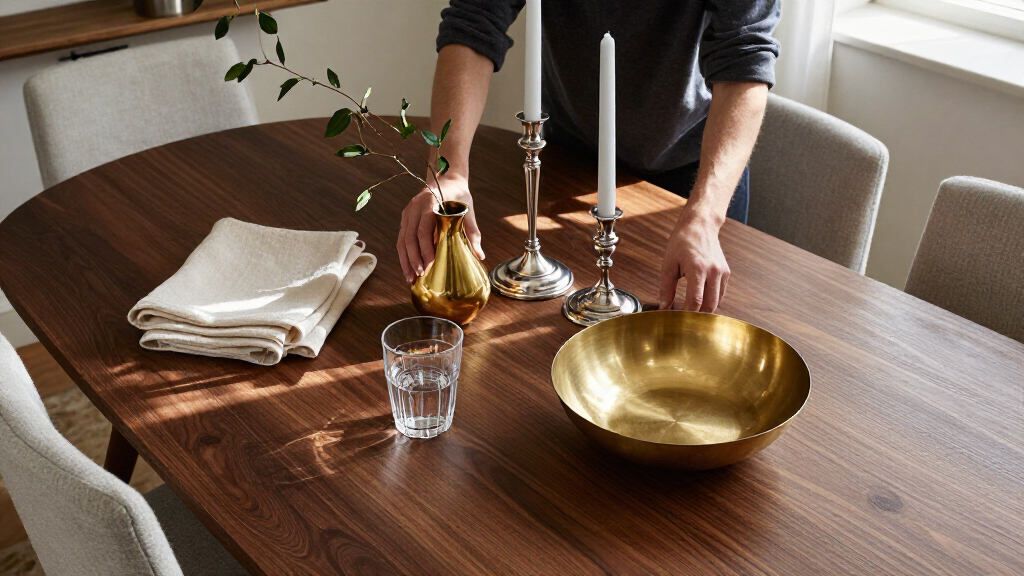
Third, use their relationship with light. Wong says silver tends to make a stronger impression in daylight, while gold contributes warmth under artificial evening light. Their reflective qualities can also affect how nearby colors appear. The feature’s remaining suggestions are to layer different metal finishes, such as chrome, stainless steel, pewter, mirror and brass, and to ground the shine with materials such as wood or marble.
Style Silver and Gold with Intention
Five practical choices can help silver and gold feel balanced in contemporary interiors. Their impact depends on the room’s lighting and surrounding materials.
Five ways to combine metals
Treat each finish as part of the room’s design, not an accidental detail.
Use the contrast between crisp silver and warm gold to shape the room’s character.
Let one finish dominate while the other supports it; no fixed ratio is prescribed.
Silver can stand out in daylight, while gold brings warmth under evening lighting.
Mix textures such as chrome, stainless steel, pewter, mirror and brass.
Bring in materials such as wood or marble to add contrast to reflective surfaces.
Where each metal can lead
Use substantial surfaces or pieces, as well as smaller accents, to set the balance.
- Silver cabinetry
- Gold-colored brass hardware
- Strong daylight presence
- Gold-toned wall and console
- Silver artwork for contrast
- Warmth under evening light
Test the effect in your room
Reflected light can influence how nearby colors look, so check the finishes in the space where they will be used.
- Compare the metals in daylight and after the lights are on.
- Try a sample or small test area before using a finish across a large surface.
- Adjust the supporting finish and surrounding materials until the mix feels deliberate.
How Metal Finishes Shape a Room
The advice matters to readers planning a room refresh because metallic finishes influence more than the appearance of individual objects. As Wong describes it, silver and gold can affect the color and quality of reflected light, changing the atmosphere around them. Their contrast also offers a way to add visual depth without relying only on paint or fabric.
The same reflective quality can make a scheme feel polished and luxurious, or more theatrical if used across many surfaces. Choosing a lead metal, varying the finishes and adding less reflective materials gives homeowners practical ways to control that effect. These are design recommendations, not evidence that every room will look a particular way; the result depends on the finishes, lighting and surrounding materials.
Products Worth Considering

LG 55-Inch QNED73B Mini LED 4K Smart TV (2026)

Philips Hue Amarant Outdoor Smart Light Bar, Black

Dyson HushJet Compact Air Purifier, White/Silver
As an affiliate, we earn on qualifying purchases.
Why Silver and Gold Contrast
The feature frames silver and gold as opposites: one cool and pale, the other warm and rich. Wong compares their relationship to the moon and the sun, while explaining that each can bring out the other’s qualities. The point is not that they function exactly like ordinary paint colors. She says their metallic surfaces create a luminous depth that flat gray or ochre alone would not provide.
López says the metals can add texture, depth and associations with jewelry, as well as tint the light they reflect. He describes using silver-toned materials in varied finishes, including chrome, stainless steel, real silver, mirror and pewter. The feature presents this layered approach as one route to a more textured result, while suggesting wood can temper the opulence and marble can add another contrasting surface.
“Silver and gold are the yin and yang of metallic shades, one cool and pale, the other warm and rich.”
— Amy Moorea Wong, Livingetc color expert
What the Design Advice Cannot Establish
The source offers expert opinions and styling examples, not a formal survey, product test or measured comparison of room designs. It does not establish that mixed metals are a universal trend, quantify how common the approach is, or show that a particular ratio of silver to gold works in every space.
The source also provides no project-specific measurements, finish specifications or lighting tests. Readers would need to assess how reflective surfaces interact with their own room’s daylight, bulbs and existing materials. The supplied material cuts off during its discussion of materials that can soften metallic shine, so it does not provide a complete account of that section.
Applying the Five Design Choices
The article describes no scheduled announcement, launch or follow-up study. For readers using the guidance, the next step is a design decision: select which metal will dominate, then choose where the supporting finish will appear. A sample or small test area can help show how each finish responds to the room’s lighting before it is used across a large surface.
From there, readers can compare different metallic textures and add a less reflective material, such as wood, to moderate the overall effect. The feature’s practical test is whether the combination looks deliberate in the actual space, both in daylight and after the lights are on; no single scheme is presented as the required outcome.
Key Questions
Can silver and gold be used in the same room?
Yes. The designers quoted in the feature say the metals can complement each other, provided the combination feels intentional rather than accidental.
How should I balance the two finishes?
Wong recommends letting one metal dominate and using the other as support. The source does not prescribe a specific percentage or ratio.
What materials can balance silver and gold?
The feature suggests wood to ground the shine and identifies marble and varied metal finishes as ways to add contrast and texture.
Does the advice come from a formal design study?
No study or measured test is cited. The guidance is attributed to Wong and López and is presented as professional design advice.
Source: livingetc.com