TL;DR
A Thanksgiving table centerpiece should set a warm seasonal mood without taking over the table. Choose a low arrangement of produce, greenery, flowers, or reusable accents, leave space for serving dishes, and keep candles stable and away from anything flammable.
Last Thanksgiving, a bowl of tiny pumpkins looked perfect on the table—until the turkey arrived and there was nowhere to put the gravy. A centerpiece can make a room feel ready for a holiday meal, but it works best when guests can still see one another and pass the food.

Get furniture and decor delivered free with Prime
- Fast, free delivery on millions of items
- Prime Video, Amazon Music and more included
- Member-only deals all year
Good Thanksgiving table centerpiece decor balances color, texture, and practical space. You can build that balance with flowers, fruit, branches, candles, or a few pumpkins from the porch. In this article, you’ll find ideas for different styles and table sizes, plus a simple way to plan an arrangement that feels thoughtful without turning dinner into a game of table Tetris.
Set out plates and serving dishes before choosing the centerpiece size.
Use a low arrangement or a narrow tall design to keep faces visible.
Repeat one or two colors or materials from your table setting for a coordinated look.
Use a tray or runner beneath damp greenery, fruit, and flower stems.
Keep real flames stable and clear of foliage, napkins, and sleeves; unscented or battery candles work well near food.
Make the centerpiece the warm welcome, not a table obstacle
A Thanksgiving table centerpiece gives your table a focal point and sets the mood, as long as it leaves room for people and food. Think of it like a welcome mat: it signals the occasion, but it should not block the doorway. A low arrangement is easy to talk across, and a narrow design can add height while leaving faces visible.
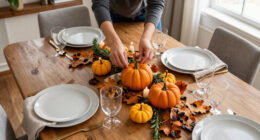
For example, on a six-seat table, a shallow wooden tray with three small pumpkins, a few pears, and loose leaves creates an autumn scene without becoming a wall between guests. If you plan to serve family-style, leave a clear strip down the middle for bowls and platters, or move the centerpiece to a sideboard once dinner starts.
Before decorating, set out your plates and serving dishes. That quick test shows how much space you actually have. A centerpiece that looks modest on an empty table can feel enormous once the bread basket, water glasses, and mashed potatoes appear.
A useful centerpiece earns its place twice: it welcomes guests before dinner and makes conversation easier during the meal.
Products Worth Considering

Bose TV Speaker (2nd Gen) Compact Soundbar with Bluetooth and HDMI-ARC, Black

Philips Hue Bridge Pro Smart Lighting Hub

Hisense 43-Inch E6 Cinema Series Hi-QLED 4K UHD Smart Fire TV (43E6QF)
As an affiliate, we earn on qualifying purchases.
Choose a style that already fits your table
Thanksgiving table centerpiece decor feels most natural when it repeats colors and materials already in your room or table setting. Pick one or two cues—such as linen, wood, green leaves, or cream dishes—and let them guide the rest. Repeating a cue connects the centerpiece to the setting, so individual objects feel like part of a whole rather than a collection gathered just for the holiday.
A rustic table with woven placemats might suit a basket of apples, pears, and dried grasses. For a cleaner, modern setting, line up three small matte ceramic pumpkins with clipped greenery between them. A floral arrangement with chrysanthemums or dahlias brings softer color to a plain white table; flower availability varies by region and year, so use what looks fresh at your local shop. The choice also affects how much care the display needs: flowers need water, while dried grasses and ceramic pieces can be set out earlier and left alone.
Texture can do more work than a rainbow of colors. Smooth apples beside crinkled leaves and rough wood give the display depth, much like a cozy sweater paired with polished shoes. If your dishes already have a bold pattern, keep the centerpiece quieter; otherwise, the table can feel visually busy and make the food harder to notice. If your linens are neutral, a rust-colored branch or burgundy bloom can carry more visual weight without competing with the meal.
- Natural: gourds, leaves, branches, pinecones, and fruit. These feel relaxed and can be inexpensive, but loose or dry materials may shed, occupy more space than expected, or need to be kept away from candle flames.
- Floral: seasonal blooms with foliage in a low vase. Flowers soften a table and add color in a compact footprint, though they need water and fragrance can compete with food or bother sensitive guests.
- Minimalist: a few repeated shapes and one restrained accent color. This style is quick to arrange and leaves visual breathing room, though it may feel sparse if the rest of the table is also very plain.
- Edible: nuts, herbs, pears, or bread that can join the meal. These accents can serve two purposes, but they need to be clean and easy to move when serving dishes arrive.
Each style has a practical tradeoff as well as a look. Natural materials feel relaxed and often cost little, but loose leaves and grasses can shed or take up more room than expected. Flowers add height and softness in a compact footprint, though they need water and can bring fragrance that competes with dinner. Repeated ceramic pieces are easy to arrange and reuse, while edible accents can serve a second purpose but should be clean and easy to move. Let the meal and the table’s available space guide the choice, not just the mood you want in a photo.
Build a centerpiece in five easy steps
To make a balanced Thanksgiving centerpiece, measure the usable table space, choose a base, arrange larger pieces first, add smaller accents, and check the view from a seated position. The order matters: starting with the table as it will actually be used prevents you from investing time in a display that has to be dismantled when dinner arrives. Checking from a chair catches problems that are easy to miss while standing, such as a vase blocking a guest’s view.
- Set the table first. Place plates, glasses, and serving dishes where you expect them to go. This reveals the space the centerpiece can occupy without forcing guests to juggle dishes or give up elbow room.
- Choose a base. Use a tray, runner, or shallow bowl to define the arrangement and protect the table. A base also makes it easier to move the whole display at once if you need the space, but it should not be so large that it claims the serving area.
- Add the largest pieces. Set out a few pumpkins, a low vase, or a fruit bowl, leaving open space around them. Large pieces establish the scale; placing them first helps avoid filling every gap with small accents and making the centerpiece feel crowded.
- Layer in texture. Tuck in greenery, leaves, or dried grasses, then add small accents such as nuts or pinecones. Use these sparingly, since details that look delicate up close can blur into clutter across the table.
- Sit down and check. Look across the table from each seat and move anything that hides a face or crowds a plate. This final view helps balance appearance with conversation and serving access.
Say you have a small round table and four guests. One compact bowl of pears with a short sprig of rosemary gives you a focal point while keeping the edges open. On a longer table, repeat small arrangements rather than stretching one large display across the whole surface. Repetition creates a gentle rhythm, like porch lights along a path, and lets platters fit between the accents. The repeated pieces also give you flexibility: you can remove one or two to make room without dismantling the whole arrangement.
If fresh flowers are part of the plan, put them in water close to dinner and keep damp stems off bare wood. A waterproof tray or a folded runner protects the finish from drips, while also giving you a contained unit that is simpler to lift away if table space gets tight.
Give small tables room to breathe
On a small Thanksgiving table, choose one compact focal point and leave the rest of the surface open. A useful rule is to begin with the space you need for plates and serving dishes, then decorate whatever remains. Small tables have little spare surface to absorb changes once dinner begins, so a display that seems manageable beforehand can quickly force guests to move drinks or pass food awkwardly. Even a beautiful arrangement starts to feel cluttered when guests have to hold their glasses in the air to make room for the potatoes.
For a two-person meal, a narrow vase with a few branches can add height without spreading across the tabletop. For four people around a small square table, try a low bowl of apples and tuck a couple of leaves beneath it. If you want candles, place one or two at the edges in stable holders rather than threading several through a crowded display. Keeping the centerpiece simple also gives hot dishes a place to land and makes it easier to reach across the table.
Imagine serving dinner on a café-size kitchen table: plates, drinks, and one hot casserole already use most of the surface. Move the centerpiece to a nearby counter before serving, or use a small tray that guests can lift and relocate easily. That simple choice keeps the table festive while leaving your hands free to pass the gravy boat. A movable arrangement is especially useful when the meal shifts from appetizers to the main course, since the same table may need to serve different purposes over the evening.
A small table benefits from restraint, but restraint does not mean bare. Repeating one color from the napkins in a piece of fruit or a ribbon around a vase can make the setting feel intentional, like a small, neatly wrapped gift. A few coordinated details create a finished feeling without spending the surface area guests need for the meal.
Keep candles, scents, and fresh greenery guest-friendly
Use stable candle holders, keep open flames well away from foliage and napkins, and choose unscented candles near food. Dried grasses, leaves, loose sleeves, and paper decorations can catch fire if they sit too close to a flame. Battery-operated candles offer a warm glow without an open flame, especially when children or pets move around the table. Because people reach across a Thanksgiving table repeatedly, even a flame that seems safely placed at the start can be brushed by a sleeve or shifted décor during the meal.
For example, a pair of short battery candles in brass holders can sit among gourds without putting dry leaves near a wick. If you prefer real candles, keep them upright in sturdy holders on a clear, level surface and place them where guests will not brush them while reaching for a dish. Extinguish them before leaving the room. A clear area around each flame also reduces the chance that a decoration will shift into it as dishes are passed.
Strong fragrances can compete with the smell of roast vegetables, warm bread, and pie. Choose unscented candles and lightly scented or fragrance-free flowers, especially when guests have allergies or sensitivities. If you are unsure about a plant, check its label or ask guests in advance. Subtle scents let the meal remain the main source of aroma, while a fragrance-free option makes the table more comfortable for guests who are sensitive to perfume or pollen. A centerpiece should make dinner feel comfortable, not leave someone sneezing through the first slice of pie.
Simple safety check: keep flame away from anything that can burn, and keep scented materials subtle around food.
Prepare the easy parts ahead and save fresh details for later
You can assemble most of a Thanksgiving centerpiece a day or two ahead by using sturdy, nonperishable items, then add fresh flowers or greenery closer to dinner. Faux pumpkins, dried botanicals, pinecones, and reusable dishes hold their shape while you handle the cooking. This divides the work: durable pieces can be arranged when you have time, and fresh items are added when they are less likely to wilt or lose their crisp appearance.
For instance, arrange a tray with small faux pumpkins, a linen runner, and a few clean pinecones on Wednesday evening. On Thursday, tuck in fresh eucalyptus or a few cut branches after breakfast. Keep fruit cool and dry, and check for bruises before it goes on the table; one soft pear can leave a sticky mark on a light runner. Adding fresh elements later also gives you a chance to see how much room remains after the table is set.
Using items you already own can also keep costs down. A bowl of garden apples, a few fallen branches, or clipped herbs can make a simple display feel generous. If you collect leaves outside, choose clean, dry ones and avoid placing damp foliage directly on wood. A waterproof base protects the surface and makes cleanup easier when dinner ends. Choosing local or already available materials reduces shopping and lets the centerpiece reflect the season, though natural items may vary in size and condition, so arrange them only after checking for mess or damage.
Reusable pieces give you options year after year. You might keep a neutral tray and candle holders, then change the color with seasonal fruit or a different ribbon. That flexibility suits a formal meal one year and a family casual gathering the next. A small set of versatile pieces can be more useful than a large collection tied to one look, because you can adapt it to the table size and the way you plan to serve dinner.
Frequently Asked Questions
How tall should a Thanksgiving centerpiece be?
Keep the arrangement low enough that guests can see across it, or choose a narrow design that people can easily look around. Before dinner, sit in the chairs and check that faces remain visible.
What can I use for an inexpensive centerpiece?
Use fruit, garden foliage, fallen branches, pinecones, or a few small pumpkins arranged in a bowl or on a tray. A small group of items in a restrained palette often looks more polished than a crowded mix of decorations.
Can I make a Thanksgiving centerpiece ahead of time?
Yes. Arrange sturdy pieces such as faux pumpkins, dried flowers, and a tray in advance, then add fresh flowers or greenery closer to dinner. Keep damp stems on a waterproof base to protect the table.
How do I decorate a small table without crowding it?
Choose one compact arrangement, such as a small bowl of pears or a short vase with a few branches. Set out plates and serving dishes first so you can see how much room remains.
Are candles safe in a Thanksgiving centerpiece?
They can be, when holders are stable and flames stay well away from foliage, dried materials, napkins, and sleeves. Battery-operated candles give you a similar glow without an open flame.
What flowers work well for Thanksgiving?
Chrysanthemums and dahlias are common seasonal choices, often paired with foliage in a low vase. Availability varies by region and year, so choose fresh blooms that suit your colors and do not bring a strong fragrance to the table.
Conclusion
The best Thanksgiving centerpiece is the one that makes the table feel welcoming and still leaves room for dinner. Start with the plates and serving dishes, build a low arrangement from pieces you like, then sit down to check the view before guests arrive.
A few pears, soft leaves, and candlelight can make an ordinary table glow like the kitchen where everyone wants to linger. Leave space for the gravy—and for one more story.