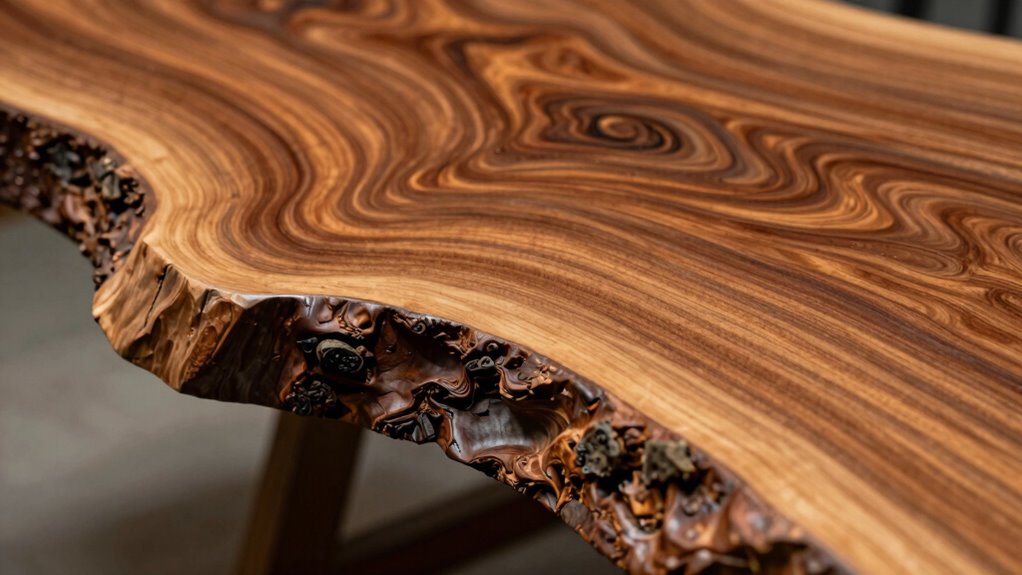

To prevent cracks, cupping, and stains in your live-edge wood, keep your environment stable by controlling humidity between 40-45% and maintaining consistent temperatures. Avoid placing furniture near heat, sunlight, or water sources. Regularly clean with gentle, damp cloths, and seal or finish your piece with suitable products like polyurethane or tung oil for added protection. Monitoring moisture levels and performing proper repairs when needed help preserve your wood’s natural beauty; explore these tips further to maintain your furniture’s health.

Get furniture and decor delivered free with Prime
- Fast, free delivery on millions of items
- Prime Video, Amazon Music and more included
- Member-only deals all year
Key Takeaways
- Maintain stable humidity (40-45%) using humidifiers or dehumidifiers to prevent expansion, contraction, and cracking.
- Avoid direct sunlight and water exposure to prevent stains, warping, and decay.
- Seal and finish the wood with durable, even coats to protect against moisture and environmental damage.
- Handle the wood carefully, supporting its weight evenly to avoid stress and cupping.
- Regularly inspect for damage and reapply protective finishes as needed to preserve natural beauty and prevent issues.
As an affiliate, we earn on qualifying purchases.
Understanding Live-Edge Wood and Its Unique Care Needs
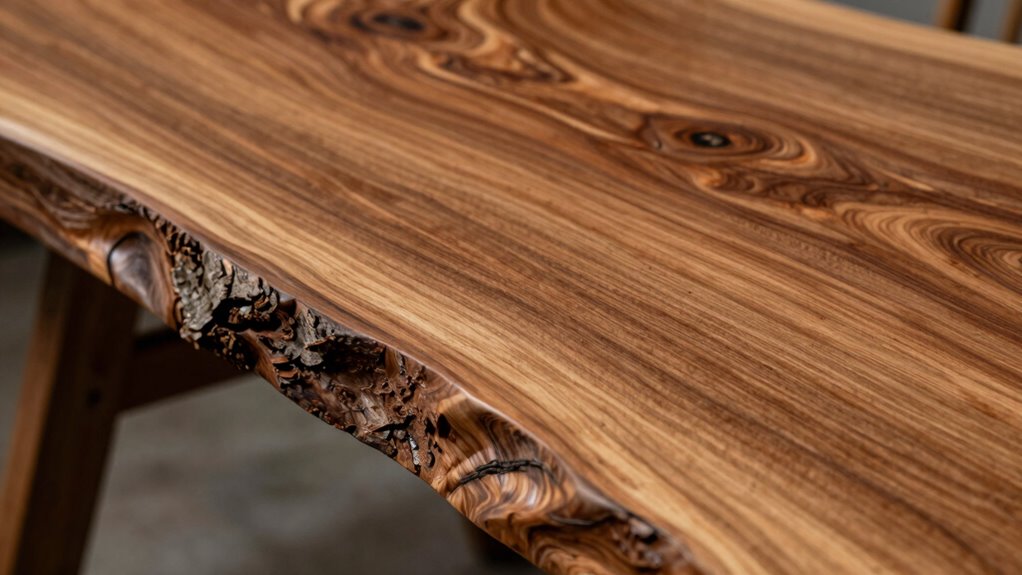
Live‑edge wood is celebrated for its natural, organic look, but it also requires special care to maintain its beauty. The unique wood grain patterns contribute considerably to its aesthetic appeal, making each piece one-of-a-kind. To preserve this natural beauty, you need to understand how the wood’s grain influences its behavior. The grain affects how the wood reacts to moisture and temperature changes, which can lead to cracks or warping if not properly cared for. Keeping the wood properly sealed and avoiding extreme fluctuations in humidity helps maintain its integrity. Regular cleaning and gentle conditioning will enhance the wood’s appearance and ensure that its rich grain and organic charm continue to impress. Proper care is essential to uphold the distinctive beauty of live-edge pieces. Additionally, using appropriate testing accuracy tools can help monitor moisture levels and prevent damage over time.
How Environmental Factors Can Damage Live-Edge Wood (Cracks, Cupping, Stains)
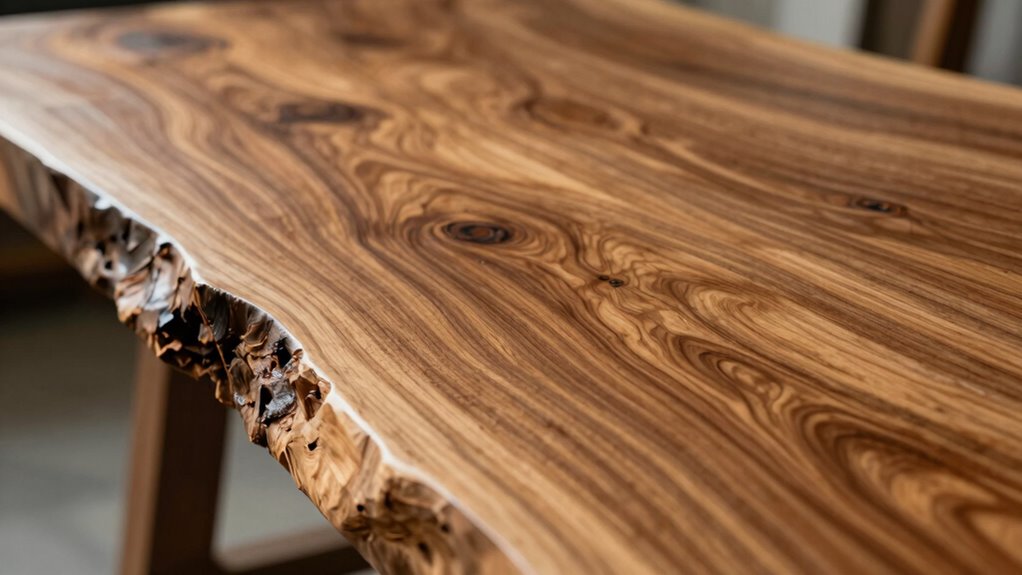
Environmental factors like humidity and temperature fluctuations can quickly damage live-edge wood if you’re not careful. Sudden changes cause the wood to expand or contract, leading to cracks, warping, or cupping. To protect your piece, control indoor humidity levels—using a humidifier or dehumidifier as needed. Pest prevention is vital; termites and wood-boring insects can weaken the wood structure. Regular inspections and chemical treatments help keep pests at bay. Additionally, avoid exposing your live-edge wood to direct sunlight or water, which can cause stains and decay. Proper environmental control minimizes stress on the wood, preventing damage over time. Understanding wood properties can help you better care for and maintain your live-edge wood furniture. Proper environmental management is essential for long-term preservation. Maintaining stable conditions reduces the risk of stress-induced cracking, ensuring your piece remains beautiful for years to come. Implementing climate control measures can further safeguard your wood from environmental stressors, especially considering the resilience of certain wood types to environmental changes.
How to Seal and Finish Your Live-Edge Wood for Better Protection
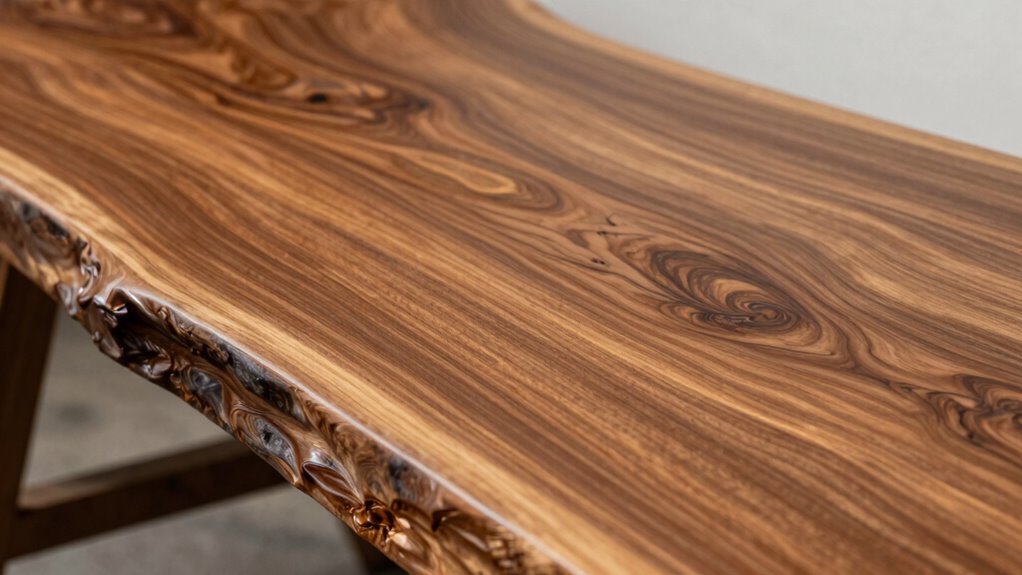
Sealing and finishing your live-edge wood is essential to protect it from moisture, stains, and daily wear. A proper wood finish enhances durability and highlights the natural beauty of the wood. Use effective sealing techniques to guarantee long-lasting protection. Here are key steps to follow:
- Clean the surface thoroughly before applying any finish.
- Choose a suitable sealant, like polyurethane or tung oil, for your project.
- Apply thin, even coats, allowing each to dry completely.
- Sand lightly between coats to achieve a smooth, professional finish.
Controlling Humidity and Temperature to Keep Your Live-Edge Wood Healthy
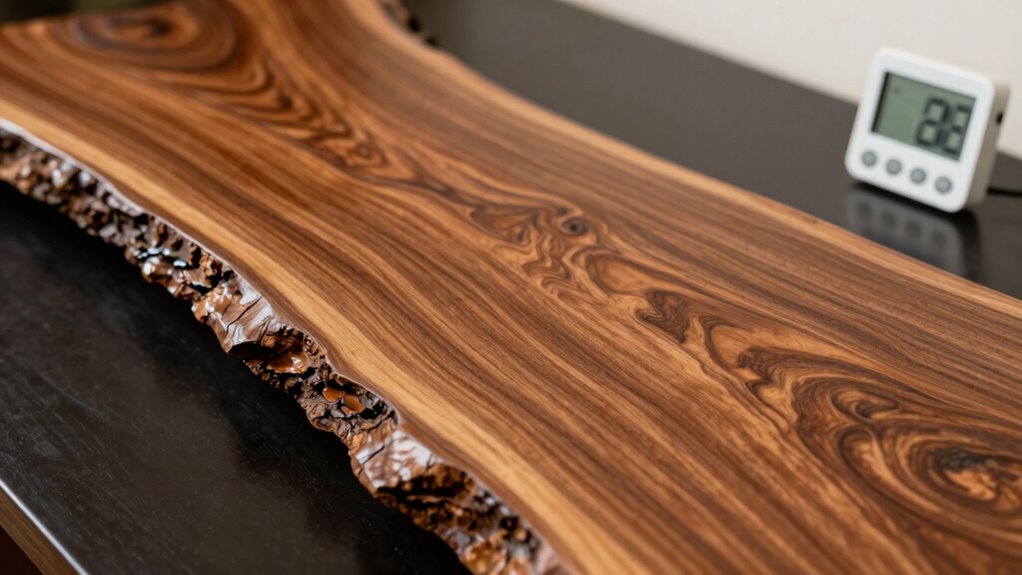
Maintaining consistent humidity and temperature levels is crucial to preventing cracks, warping, and other damage to your live-edge wood. Humidity control is essential; fluctuations cause wood to expand or contract, risking warping or splitting. Use a hygrometer to monitor moisture levels, aiming for 40-45% humidity. Temperature regulation also plays a key role—keep your space between 65-75°F to avoid stress on the wood. Avoid placing your furniture near heat vents, direct sunlight, or drafts, which can cause uneven temperature shifts. Using a humidifier or dehumidifier helps stabilize moisture levels, while maintaining a steady environment prevents the wood from reacting to environmental changes. Proper temperature regulation and humidity control are your best defenses against cracks, cupping, and staining in your live-edge piece. Additionally, monitoring and maintaining proper air quality can help prevent issues caused by excess dust or pollutants settling on the wood surface. Ensuring good air circulation also helps distribute temperature and humidity evenly throughout the space. Incorporating climate control devices designed specifically for wood preservation can further enhance your efforts to keep your piece healthy and looking its best.
Best Practices for Cleaning and Maintaining Your Live-Edge Furniture
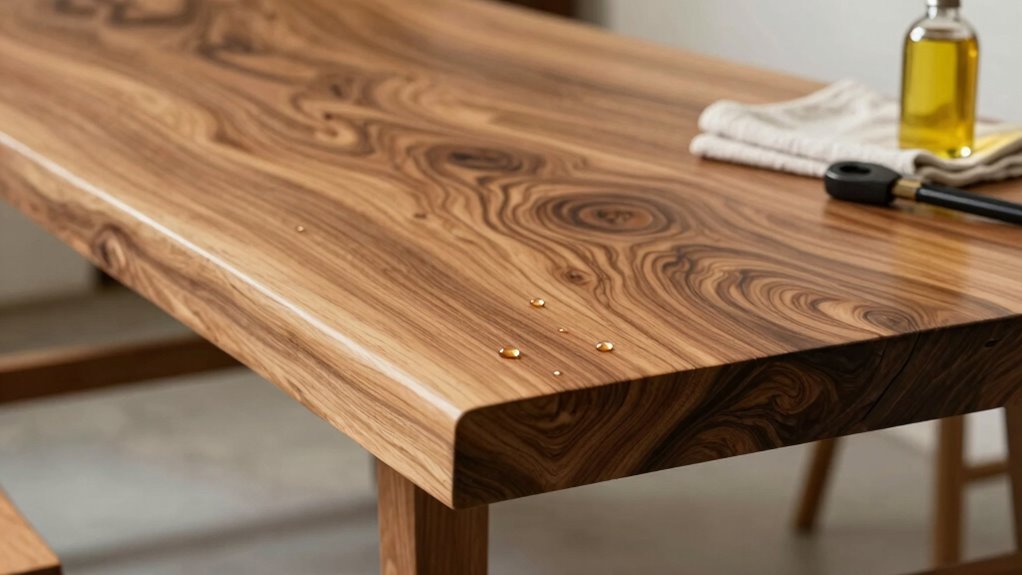
Keeping your live-edge furniture looking its best requires regular cleaning and proper maintenance. The finish selection plays a key role in how you clean and care for your piece. The right finish can also enhance durability and protect against environmental factors. Choose gentle cleaning methods that won’t damage the finish or wood. Here are some best practices:
- Use a soft, damp cloth for routine dusting and light cleaning.
- Avoid harsh chemicals; opt for mild soap or specialized wood cleaners.
- Reapply a protective finish when you notice wear or dullness to maintain surface integrity.
- Keep liquids away or wipe spills immediately to prevent stains and warping.
- Incorporate Free Floating techniques when designing or maintaining your outdoor space to allow natural movement and prevent damage to your furniture. Understanding wood movement can help you better anticipate and accommodate changes in your furniture over time.
Tips for Handling and Using Live-Edge Wood to Prevent Issues
Since live‑edge wood is naturally textured and often irregular, handling it carefully is vital to prevent cracks, splits, or warping. When moving or working with the wood, lift it gently and support its weight evenly to avoid stress points. Before applying any finish, consider your finish selection thoughtfully; a good choice can help protect the wood from moisture and temperature changes that cause issues. Be cautious with wood staining—test it first to ensure it enhances the grain without penetrating unevenly or causing blotching. Use appropriate tools and techniques to avoid scratching or gouging the surface. Always handle the wood in a stable environment, and avoid placing it in direct sunlight or near heat sources to maintain its integrity and prevent future problems. Additionally, proper storage of live-edge wood can significantly reduce the risk of warping or cracking over time. Paying attention to climate control ensures the wood remains stable and preserves its natural beauty longer. Incorporating proper humidity levels can further help prevent moisture-related issues and maintain the wood’s durability. Furthermore, understanding the wood’s natural properties can guide better handling and treatment practices to extend its lifespan. Being aware of wood movement tendencies allows for more effective preventative measures, ensuring your live-edge pieces stay beautiful for years to come.
How and When to Repair Cracks, Cupping, or Stains in Live-Edge Wood
You should check your live-edge wood regularly for cracks, cupping, or stains so you can catch issues early. When you notice damage, using proper repair techniques helps maintain its beauty and integrity. Acting promptly guarantees your piece stays strong and looks great for years to come. Additionally, understanding multi-unit setups can help you better manage larger or more complex pieces of live-edge wood.
Spotting Damage Early
Early detection of damage in live-edge wood is crucial to prevent minor issues from escalating into costly repairs. Regularly inspect your piece for early signs of cracks, cupping, or stains, especially in areas exposed to moisture or sunlight. Recognizing problems early allows you to address them promptly, preserving the natural patina and avoiding the need for harsh treatments. Use these tips to spot damage quickly:
- Look for new or widening cracks in the wood surface.
- Check for uneven surfaces indicating cupping.
- Notice discoloration or stains that stand out from the natural patina.
- Monitor humidity levels to prevent further damage.
- Understanding wood movement and how environmental factors influence it can help you take preventive measures. Additionally, being aware of proper maintenance techniques ensures your live-edge wood remains in excellent condition over time.
Early intervention with eco-friendly finishes can help protect your live-edge wood and maintain its beauty over time.
Proper Repair Techniques
Knowing how and when to repair cracks, cupping, or stains guarantees your live-edge wood stays beautiful and functional. For minor issues, start with gentle sanding methods to smooth surfaces and remove loose material. When repairing cracks or cupping, consider dyeing techniques to blend repairs seamlessly with the wood’s natural color. Use epoxy or wood filler for larger cracks, then sand smoothly once dried. For stains, apply a stain-blocking primer or re-stain affected areas, matching the original hue. Proper wood repair techniques can also help prevent future issues by addressing underlying causes early. Here’s a quick overview:
| Repair Type | Technique | Tips |
|---|---|---|
| Cracks | Epoxy filling | Sand after drying |
| Cupping | Clamping & drying | Use dyeing techniques for uniform color |
| Stains | Re-staining | Use appropriate sanding methods |
| Surface Damage | Sand & refinish | Ensure smooth finish |
These methods help restore your live-edge wood’s beauty. Proper maintenance techniques can also prevent future issues and prolong the life of your wood, ensuring it remains resilient against common problems like wood damage caused by environmental changes.
Long-Term Strategies to Preserve Your Live-Edge Wood’s Natural Beauty
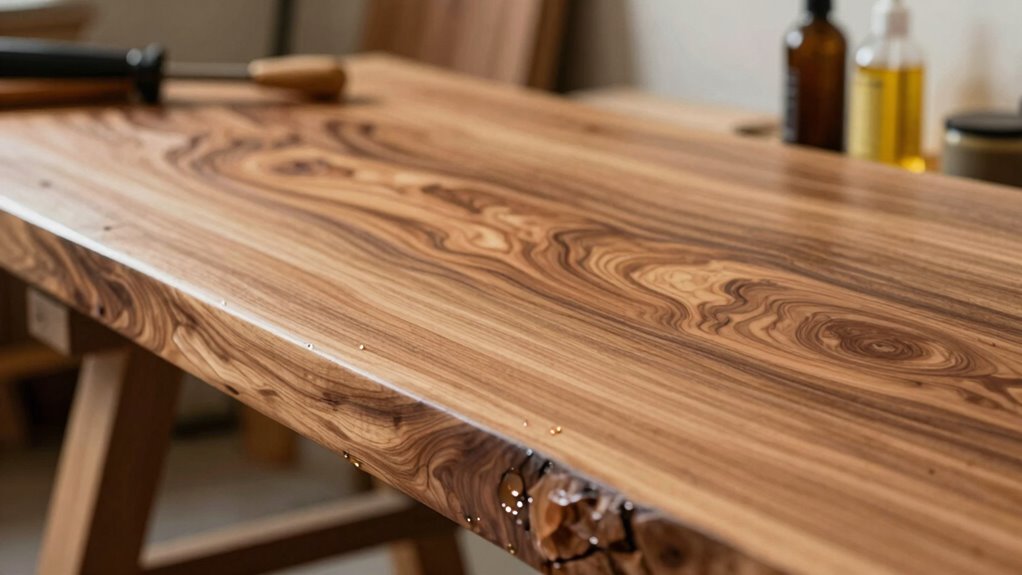
To keep your live-edge wood looking stunning over time, adopting long-term preservation strategies is essential. Focus on maintaining the wood grain’s integrity and choosing the right finish types to protect against damage. Regularly apply a high-quality sealant or oil suited for your finish type to prevent moisture absorption and UV damage. Keep your wood away from direct sunlight and drastic temperature changes, which can cause cracking or cupping. Additionally, reapply protective finishes as needed to uphold the wood’s natural luster. Proper wood care techniques can significantly extend the lifespan and beauty of your live-edge piece.
Frequently Asked Questions
Can Live-Edge Wood Be Safely Exposed to Outdoor Elements?
Yes, you can expose live-edge wood to outdoor elements if you guarantee proper weather resistance. To boost outdoor durability, apply a high-quality sealant or outdoor finish that resists moisture and UV rays. Regular maintenance, like reapplying protective coatings, helps prevent cracks, cupping, and stains caused by weather fluctuations. With the right care, your live-edge wood can withstand outdoor conditions while maintaining its beauty and integrity.
What Are the Best Cleaning Products for Live-Edge Wood?
You’d think finding the perfect wood cleaning products for live-edge wood would be hard, but it’s simpler than you think. Use gentle, pH-balanced cleaners like a mix of mild soap and water or specially formulated wood cleaning products. Avoid harsh chemicals that can damage the finish. Remember, your goal is to clean without harming the wood’s beauty—so choose product recommendations that protect and preserve, not strip or stain.
How Often Should I Reapply Sealant or Finish?
You should reapply sealant or finish every 1 to 3 years, depending on usage and exposure to moisture or sunlight. The sealant lifespan varies, so keep an eye out for signs of wear like dullness or cracking. Regular reapplication helps maintain protection against stains, cracks, and cupping. By staying proactive with your reapplication frequency, you’ll keep your live-edge wood looking beautiful and well-preserved for years to come.
Are There Specific Wood Types Better Suited for Live-Edge Furniture?
Think of choosing wood for live-edge furniture like selecting a sturdy, reliable friend. Hardwoods like walnut, maple, and oak offer better wood durability, resisting cracks and cupping. Their distinct grain patterns add character and strength, making them ideal. Softwoods, while charming, tend to warp more easily. So, for longevity and beauty, stick with hardwoods that showcase mesmerizing grain patterns and stand up to daily use.
How Can I Identify Early Signs of Damage in Live-Edge Wood?
You can spot early damage signs in live-edge wood by checking for moisture intrusion and surface cracking. Feel the surface for changes in texture or softness, which indicate moisture issues. Look closely for tiny cracks or fissures on the surface, as these often signal the start of larger cracks or cupping. Regular inspection helps you catch problems early, so you can take steps to protect your wood before more serious damage occurs.
Conclusion
To keep your live-edge wood looking its best, stay vigilant and follow proper care practices. Seal, maintain consistent humidity, and handle with care to prevent cracks, cupping, and stains. Remember, an ounce of prevention is worth a pound of cure—nurture your wood now to enjoy its natural beauty for years to come. With patience and attention, you’ll guarantee your live-edge piece remains a stunning centerpiece that ages gracefully.
Halloween Picks
halloween
As an affiliate, we earn on qualifying purchases.