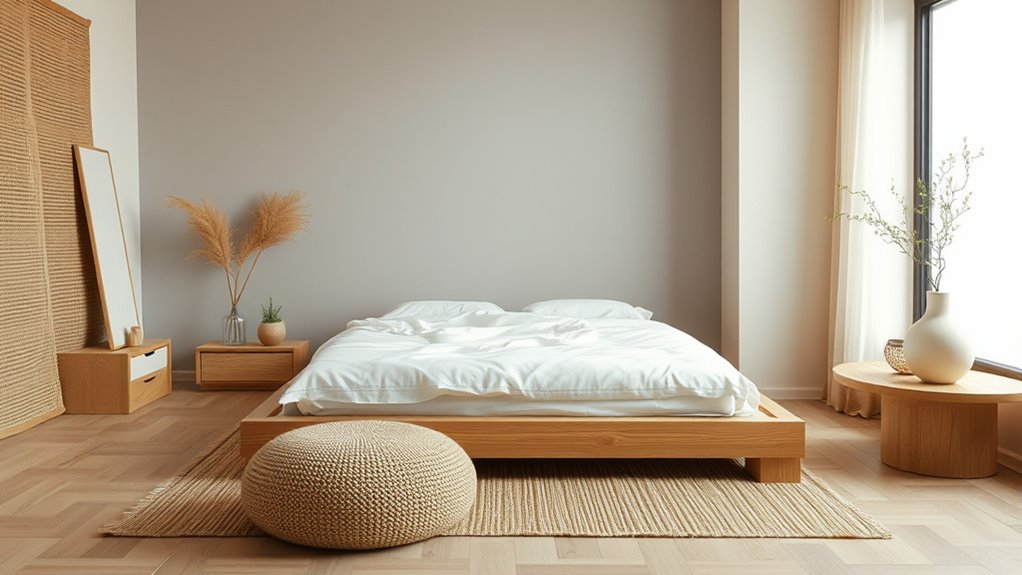

Japanese minimalism influences Japandi boho by blending clean, simple lines with natural textures and imperfect beauty. It encourages you to create tranquil spaces that prioritize functionality and authenticity, often using wood, stone, and aged materials. Wabi sabi’s celebration of imperfection adds character and depth, while Zen principles promote mindfulness and calm. If you keep exploring, you’ll discover how this harmonious style combines serenity, warmth, and rustic charm in truly unique ways.
Key Takeaways
- Japanese minimalism emphasizes simplicity, natural materials, and Wabi Sabi aesthetics, influencing Japandi’s rustic elegance and understated charm.
- The focus on tranquility and mindfulness in Japanese design shapes Japandi’s serene, clutter-free spaces.
- Incorporation of aged, imperfect elements from Japanese Wabi Sabi adds depth and character to Japandi boho decor.
- Japandi blends Japanese minimalism’s clean lines with Scandinavian functionality, creating warm, balanced environments.
- Natural textures and deliberate simplicity in Japanese minimalism inspire the relaxed, earthy vibe of Japandi boho style.
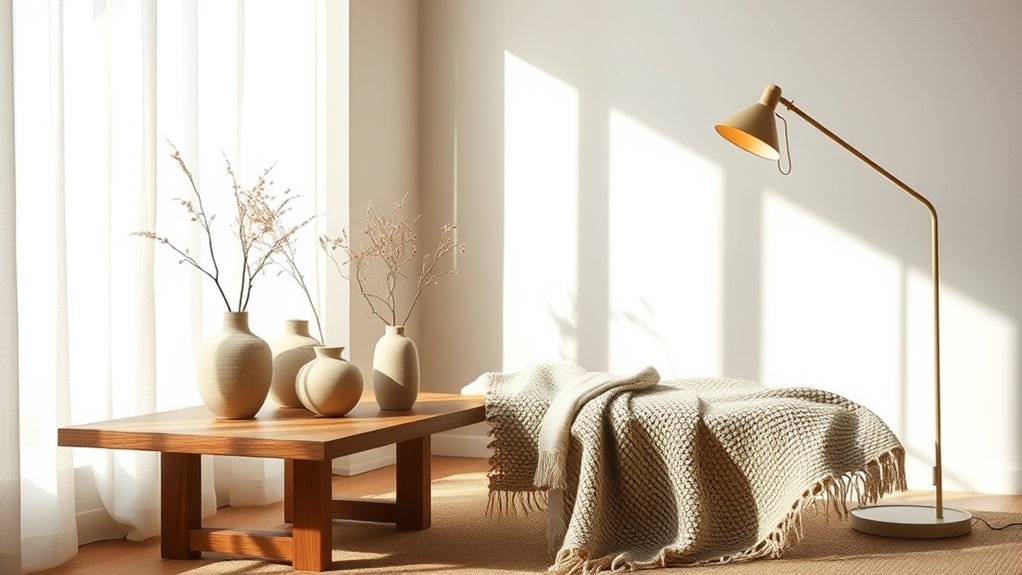
Japanese minimalism emphasizes simplicity, functionality, and harmony in design and lifestyle. It encourages you to focus on what truly matters, stripping away excess to create a space of calm and clarity. At the heart of this philosophy lies Wabi sabi aesthetics, which celebrate the beauty of imperfection, transience, and rustic elegance. Instead of striving for flawlessness, you learn to appreciate the unique character of each object—the cracks, patina, or uneven textures that tell a story. This approach helps you embrace authenticity over perfection, fostering a sense of tranquility in your environment.
Embrace the beauty of imperfection and authenticity to create a tranquil, harmonious space.
Zen inspired simplicity plays a essential role in shaping Japanese minimalism. It guides you to cultivate a sense of mindfulness and presence in your daily life. By adopting a minimalist mindset rooted in Zen principles, you prioritize quality over quantity, choosing only what serves a purpose and brings genuine joy. The design is often characterized by clean lines, neutral tones, and uncluttered spaces that allow your mind to breathe and focus. You might notice that the furniture and decor are deliberately understated, emphasizing natural materials like wood, stone, and paper, which further connect you to nature and promote serenity.
This Zen-inspired approach encourages you to create a harmonious flow within your home, where each element has a place and a reason for being there. It’s about cultivating a sense of balance, not just visually but emotionally too. As you incorporate Wabi sabi aesthetics, you might keep items that age gracefully, like a well-worn ceramic vase or a rustic wooden table, adding depth and character to your space. These pieces remind you that beauty isn’t about perfection but about embracing the natural cycle of decay and renewal.
In the context of Japandi, the fusion of Japanese minimalism and Scandinavian design, this focus on simplicity and authenticity becomes even more prominent. You combine the clean, functional aspects of Scandinavian style with the Wabi sabi and Zen-inspired values from Japan, resulting in spaces that feel both warm and uncluttered. This blend of influences allows you to craft a home that’s not only aesthetically pleasing but also deeply rooted in mindful living. By embracing Japanese minimalism’s core principles, you create a sanctuary that nurtures your well-being, fosters creativity, and celebrates the quiet beauty of imperfection.

WoodShine Mid Century Modern Mini-Swing Wooden Coffee/Tea Table, Japanese Low Floor Desk, Real Solid Wood Cafe Table with Storage for Home Living Room,Office, Length of 47.25 inches,Natural
- Material Quality: Made of durable Malaysia Oak rubber wood
- Design & Aesthetics: Contemporary look with natural beauty
- Storage Feature: Includes small swing storage space
As an affiliate, we earn on qualifying purchases.
As an affiliate, we earn on qualifying purchases.
Frequently Asked Questions
How Does Japanese Minimalism Impact Modern Interior Design Trends?
Japanese minimalism influences modern interior design by emphasizing simplicity, clean lines, and functional spaces. You’re encouraged to embrace zen philosophy, creating calm, balanced environments. Using natural materials like wood, stone, and bamboo, you bring warmth and texture. This approach promotes clutter-free living, focusing on quality over quantity, and helps you cultivate tranquility, mindfulness, and a harmonious atmosphere in your home.
What Are Key Elements That Define Japanese Minimalism?
You can identify Japanese minimalism by its emphasis on zen principles and natural materials. It focuses on simplicity, clean lines, and uncluttered spaces that promote tranquility. You’ll notice a preference for wood, stone, and other natural textures that create a warm, calming environment. This style avoids excess, highlighting only essential elements, and encourages mindfulness and balance, making your space feel serene and harmonious.
How Can Japanese Minimalism Be Adapted for Small Spaces?
Think of your small space as a blank canvas ready for minimal magic. To adapt Japanese minimalism, choose space-saving furniture that serves multiple purposes, like a foldable table or a bed with storage. Incorporate multifunctional decor to keep clutter at bay and maintain serenity. Keep the design simple with clean lines and neutral tones, allowing your space to breathe and feel larger, like a peaceful Zen garden in your home.
What Cultural Influences Shape Japanese Minimalist Aesthetics?
You’re influenced by Zen philosophy and traditional craftsmanship when shaping Japanese minimalist aesthetics. Zen emphasizes simplicity, mindfulness, and harmony, guiding your focus on clean lines and uncluttered spaces. Traditional craftsmanship highlights quality and natural materials, inspiring authentic, well-crafted pieces. Together, they create a serene, balanced environment where every element has purpose, fostering tranquility and mindfulness in your living space.
How Does Japanese Minimalism Promote Mental Well-Being?
Imagine a Zen garden in your mind’s eye—Japanese minimalism fosters mental well-being by encouraging mindfulness practices and clutter reduction. You’ll find that simplifying your space reduces stress, promotes focus, and creates a sense of calm. By embracing clean lines and intentional design, you’re more likely to stay present, boost your mental clarity, and experience tranquility—like having your own digital detox, but for your mind.
Conclusion
By embracing Japanese minimalism, you gently invite tranquility into your space, creating a subtle harmony that whispers calmness. This pared-down approach serves as a delicate canvas, allowing softer boho and Scandinavian influences to gently bloom. As you blend these styles, your home becomes a quiet retreat where simplicity and warmth dance together effortlessly. Ultimately, you craft an environment that feels like a peaceful breeze—simple, soothing, and beautifully understated, inviting serenity into every corner.